lititzbmx-docs
LBS-004 — Lititz BMX Logo and Brand Mark Usage Standards
Document Number: LBS-004
Version: 1.0
Status: Active
Effective Date: July 2026
Owner: Lititz BMX
This document establishes the official standards governing use of the Lititz BMX logo and brand mark.
These standards protect the logo’s visual integrity and ensure consistent presentation across the Lititz BMX website, archive records, videos, photographs, social media, educational resources, exhibits, printed materials, merchandise, partner materials, and future publications.
Purpose
The purpose of this document is to establish consistent and controlled requirements for use of the Lititz BMX logo and brand mark.
Consistent use helps audiences identify official Lititz BMX materials, distinguish them from altered or unrelated content, and understand when Lititz BMX is publishing, presenting, participating, or communicating in an official capacity.
These standards also provide direction for collaborators, media organizations, educational users, vendors, partners, sponsors, and other third parties who may receive or use Lititz BMX brand assets.
Availability of a logo file does not, by itself, authorize every possible use. All uses must preserve the approved mark and comply with the requirements established in this document.
Institutional Context
Lititz BMX is an independent BMX archive, preservation project, media platform, and developing private museum and education concept based in Lititz, Pennsylvania.
The project documents BMX artifacts, riders, manufacturers, teams, events, media, and community history through physical preservation, digital cataloging, original research, oral-history interviews, educational resources, and public media.
The Lititz BMX name and logo identify materials produced, maintained, presented, or formally authorized by Lititz BMX. Use of the mark must remain consistent with the project’s preservation mission, public documentation practices, and independent identity.
Scope
This standard applies to all official or authorized uses of the Lititz BMX name, logo, and brand mark, whether created directly by Lititz BMX or by another person or organization with permission.
It applies to digital and physical uses, including the Lititz BMX website and archive, GitHub documentation, artifact records, educational resources, social media, videos, podcasts, interviews, presentations, exhibits, signage, printed materials, campaigns, merchandise, partner materials, media coverage, and future museum, rental, and public-program applications.
This standard also applies to collaborators, media organizations, educational users, sponsors, vendors, partners, and other third parties who receive or reproduce Lititz BMX brand assets.
Use of the Lititz BMX name without the visual logo remains subject to requirements concerning accuracy, affiliation, endorsement, sponsorship, and representation established later in this document.
Authority and Document Relationships
This document is the formal standard governing use of the Lititz BMX logo and brand mark.
The approved logo files published in the official Lititz BMX Brand Assets directory are the visual authority for the mark. Their geometry, proportions, component relationships, lettering, transparency, and approved color arrangements must not be reconstructed or altered.
The Brand Assets package also includes practical usage guidance, technical information, verification imagery, and an asset manifest. These materials support implementation of this standard but do not replace it.
The document hierarchy is:
- LBS-004 — Lititz BMX Logo and Brand Mark Usage Standards
- Official logo files published in the Brand Assets directory
- Logo Usage Guidance
- Asset Manifest
- Four-variant verification image
If written guidance conflicts with an official approved logo file, the approved file controls until the documentation is reviewed and corrected.
The four-variant verification image is provided for comparison and identification. It is not intended to be cropped, separated, or used as a substitute for the individual transparent logo files.
Definitions
Approved Logo
The complete Lititz BMX logo represented by one of the official files published in the Lititz BMX Brand Assets directory.
Approved Variant
One of the four authorized tire-and-lettering color combinations distributed by Lititz BMX. The approved variants are different presentations of one logo and are not separate brand marks.
Brand Mark
The complete visual identification consisting of the BMX tire and wheel, spokes, center hub, Pennsylvania keystone, and “Lititz BMX” lettering in their approved arrangement.
Brand Assets
The official logo files, documentation, verification imagery, technical information, and related materials published or formally distributed by Lititz BMX.
Official File
A logo file published in the official Lititz BMX Brand Assets directory and identified in the Asset Manifest.
Pennsylvania Keystone
The solid white Pennsylvania keystone incorporated into the wheel design. The keystone is an intentional component of the approved logo and must not be removed, recolored, filled with another image, or replaced.
Negative Space
Transparent areas intentionally preserved within and around the logo, including the open areas between the slanted sides of the Pennsylvania keystone and the inside of the tire.
Alteration
Any change to the approved logo’s geometry, proportions, component placement, lettering, transparency, color arrangement, spacing, orientation, or visual treatment.
Co-branding
Placement of the Lititz BMX logo in the same communication, graphic, exhibit, publication, or presentation as the name or mark of another person, organization, sponsor, partner, vendor, or media outlet.
Authorized Use
Use performed directly by Lititz BMX or use specifically permitted by Lititz BMX and carried out consistently with this standard.
Third Party
Any individual, organization, business, publication, media outlet, educational institution, sponsor, partner, vendor, or other entity that is not Lititz BMX.
Approved Logo Composition
The approved Lititz BMX logo is a single, integrated visual composition. It consists of:
- a BMX tire forming the outer circular boundary;
- the wheel and rim within the tire;
- black spokes arranged in the approved configuration;
- a solid black circular center hub;
- a solid white Pennsylvania keystone positioned within the wheel; and
- the “Lititz BMX” lettering centered beneath the wheel.
These components together form the complete Lititz BMX logo. Their relative position, scale, spacing, alignment, geometry, and visual relationship must remain consistent with the official logo files.
No component may be removed, moved, replaced, independently resized, redrawn, or substituted. Individual components must not be presented as the official Lititz BMX logo unless Lititz BMX has specifically authorized that separate use.
The four approved variants differ only in the assigned color of the tire and the “Lititz BMX” lettering. The spokes, center hub, Pennsylvania keystone, wheel geometry, component placement, proportions, and spacing remain consistent across all four variants.
The official logo files control visual details that are impractical to define through written measurements, including the exact tire profile, spoke arrangement, keystone shape, lettering, spacing, and alignment. Users must reproduce the official files rather than reconstructing the logo.
Approved Logo Variants
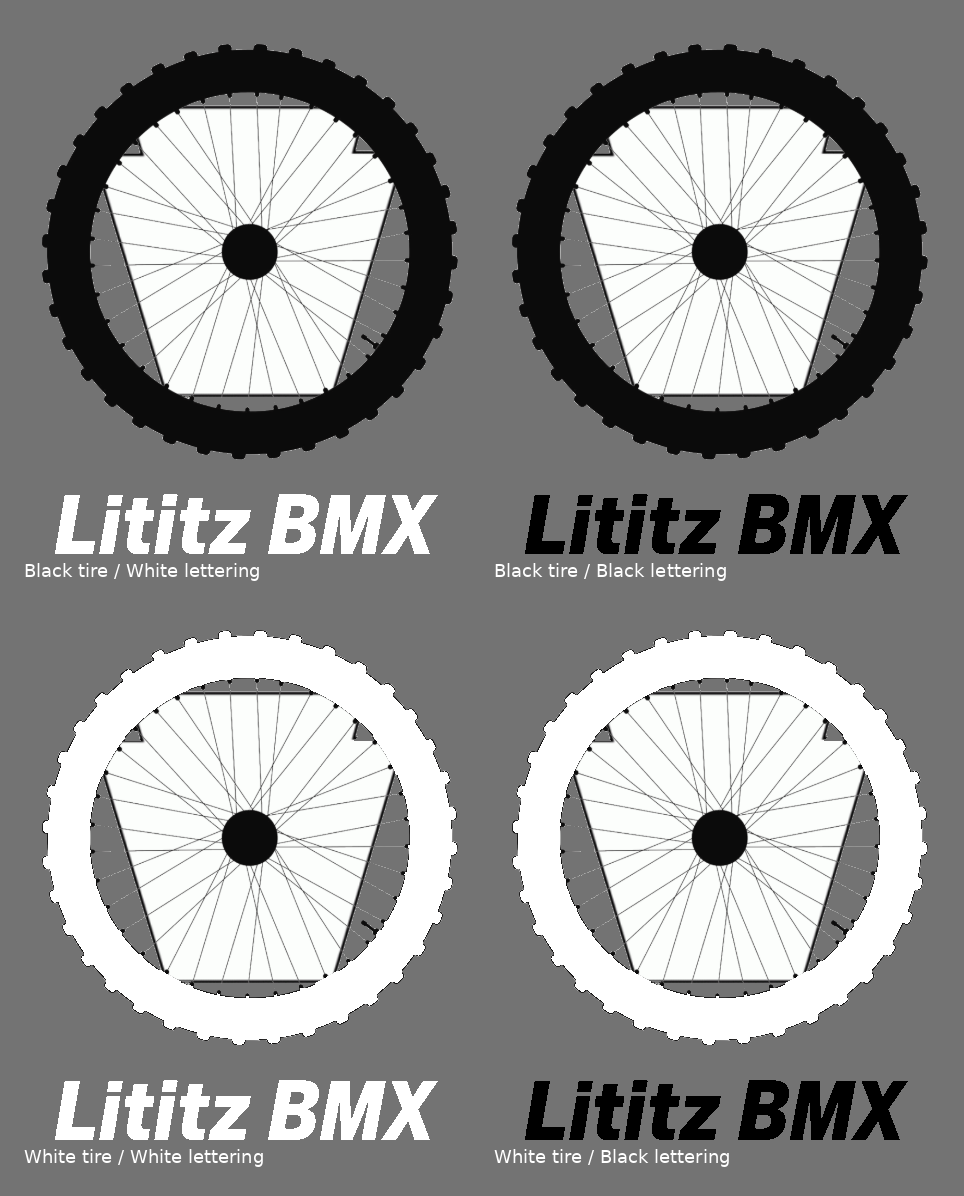
Figure 1. Approved Lititz BMX logo variants. The gray field is provided only to demonstrate transparency and contrast. Use the individual transparent PNG files for production and publication.
Lititz BMX publishes four approved variants of the logo to support clear and consistent presentation across different backgrounds and applications.
The four variants are:
- Black tire / white lettering
- Black tire / black lettering
- White tire / white lettering
- White tire / black lettering
These are color-placement variants of one approved logo. They are not separate brand marks, and they do not authorize the creation of additional color combinations.
Users may select the approved variant that provides the strongest overall contrast and legibility for the intended background. The tire and lettering colors must not be independently changed, exchanged, recolored, or recreated outside the four official files.
All other components remain consistent across the four variants, including the black spokes, black center hub, solid white Pennsylvania keystone, wheel geometry, lettering style, component placement, spacing, and proportions.
The verification image must not be cropped, separated, or used to extract individual logo files.
Current individual files must be obtained from the official Lititz BMX Brand Assets directory.
Transparency and Negative Space
The official Lititz BMX logo files are transparent PNG images. Transparency is an intentional structural feature of the approved logo and must be preserved.
The gray background used in the four-variant verification image is provided only to demonstrate the logo’s transparent areas and contrasting color options. The gray field is not part of any approved logo.
The Pennsylvania keystone remains solid white in all four approved variants. It must not be made transparent, recolored, replaced, or filled with another image, texture, or design.
The open areas between the slanted sides of the Pennsylvania keystone and the inside of the tire remain transparent. These negative spaces must not be filled with white, black, gray, or another color.
Other open areas within and around the wheel also remain transparent as represented in the official files. The background on which the logo is placed may therefore remain visible through those areas.
Checkerboard patterns, gray transparency-preview fields, editing-canvas backgrounds, and other software display indicators must never be embedded into or distributed as part of an official logo file.
When an application requires the logo to appear over a nontransparent background, the official transparent file should be placed over the selected background within the final layout. The logo itself, including its internal negative space, must not be altered or filled to simulate transparency.
Background Selection and Contrast
The approved logo variant must be selected according to the background on which the logo will appear. The complete logo—including the tire, wheel structure, Pennsylvania keystone, and “Lititz BMX” lettering—must remain clearly visible and legible.
As a general practice:
- variants using black elements are intended primarily for light or sufficiently contrasting backgrounds;
- variants using white elements are intended primarily for dark or sufficiently contrasting backgrounds; and
- mixed black-and-white variants may be used where the tire and lettering require different contrast treatments within the same application.
Background selection must account for the visibility of the entire mark, not only the lettering. A background that allows the words “Lititz BMX” to remain readable but obscures the tire, spokes, Pennsylvania keystone, or other components is not an acceptable use.
The logo should not be placed over excessively detailed, visually crowded, or high-contrast imagery that interferes with recognition of the mark. When used over photography, video, patterned surfaces, or complex graphics, the logo must be positioned in an area that provides sufficient visual separation.
When adequate contrast cannot be achieved with the selected variant, users must choose another approved variant or place the unaltered logo over a simple contrasting field within the larger design.
Outlines, strokes, glows, shadows, gradients, halos, or other effects must not be added to compensate for inadequate background contrast.
No universal background color is required. The determining requirement is that the approved logo remain visually complete, recognizable, and legible in its intended presentation.
Logo Integrity Requirements
The official Lititz BMX logo must be used as supplied in one of the approved logo files. Its visual structure must remain intact throughout placement, scaling, reproduction, conversion, and publication.
Users must preserve:
- the complete logo’s original proportions and aspect ratio;
- the approved geometry of the tire, rim, spokes, center hub, and Pennsylvania keystone;
- the approved size and position of each component relative to the others;
- the approved lettering style, spacing, alignment, and placement;
- the assigned black-and-white color arrangement of the selected variant;
- the solid white Pennsylvania keystone;
- the black spokes and black center hub;
- all intended transparency and negative space; and
- the complete outer boundaries of the tire and lettering.
The logo may be enlarged or reduced proportionally. The aspect ratio must remain locked so that the logo is not stretched, compressed, widened, narrowed, skewed, or otherwise distorted.
The logo must not be recreated by tracing, redrawing, rebuilding individual components, substituting similar artwork, or attempting to reproduce the design from a screenshot or comparison image.
Individual logo components must not be repositioned or separated from the approved composition. The tire-and-wheel graphic must not be moved independently from the lettering, and the lettering must not be moved independently from the tire-and-wheel graphic, unless Lititz BMX has specifically approved a separate application.
File conversion, resizing, compression, or export must not materially change the logo’s appearance. When software, websites, printing services, or social-media platforms introduce visible distortion, loss of transparency, excessive compression, color changes, or unwanted effects, the affected file should not be treated as an official master asset.
Current official files should remain available separately from derivative working copies so that altered, compressed, or platform-generated versions are not mistakenly redistributed as approved originals.
Clear Space, Placement, and Legibility
Adequate clear space must be maintained around the complete Lititz BMX logo so that it remains visually distinct from surrounding text, photographs, graphics, borders, page edges, other logos, and design elements.
Clear space should be evaluated from the outermost visible boundaries of the tire and the “Lititz BMX” lettering. Transparent padding contained within an image file must not be treated as a substitute for adequate visual separation in the final layout.
No fixed mathematical clear-space measurement has been adopted in this version of the standard. The required amount may vary according to the application, but surrounding content must not crowd, overlap, touch, or visually merge with the logo.
The complete logo must remain visible. Do not crop:
- any portion of the outer tire;
- the “Lititz BMX” lettering;
- any portion of the Pennsylvania keystone; or
- other structural elements of the wheel.
The logo may be positioned near the edge of a page, image, sign, video frame, or other layout only when the complete mark remains visible and sufficient visual separation is maintained.
No universal minimum reproduction size has been adopted. The logo must not be used at a size where the tire profile, wheel structure, spokes, center hub, Pennsylvania keystone, or lettering become materially unclear or illegible.
When the logo cannot remain recognizable at the intended size, users must enlarge it, revise its placement, or select another approved application. Components must not be simplified, thickened, removed, or redrawn to improve small-size visibility.
The logo must be presented in its normal upright orientation unless Lititz BMX specifically approves another presentation. It must not be tilted, rotated, inverted, or placed at an angle as a decorative treatment.
Placement must preserve the logo’s role as a complete identifying mark. Partial, obscured, or background-only presentations must not be represented as the official Lititz BMX logo.
Prohibited Alterations
The Lititz BMX logo must not be modified, reconstructed, embellished, or combined with other elements in a manner that changes the approved mark.
Prohibited alterations include:
- stretching, compressing, skewing, warping, or otherwise distorting the logo;
- rotating, tilting, flipping, inverting, or changing its normal orientation;
- changing the proportions, scale relationships, alignment, or spacing of its components;
- moving, separating, removing, replacing, or independently resizing the tire-and-wheel graphic, Pennsylvania keystone, or lettering;
- changing, substituting, redrawing, or attempting to imitate the approved lettering;
- recoloring any component or creating color combinations outside the four approved variants;
- making the solid white Pennsylvania keystone transparent or filling it with another color, image, pattern, or texture;
- filling, covering, or otherwise altering the intended transparent negative spaces;
- changing the black spokes or black center hub;
- adding outlines, strokes, borders, shadows, drop shadows, glows, halos, bevels, gradients, reflections, textures, or other visual effects;
- applying transparency, distressing, weathering, or other treatments to visible logo components, except for complete-logo transitions and official watermark use expressly permitted in the Digital, Social Media, Video, and Podcast Use section;
- cropping, masking, partially obscuring, or placing another element over the logo;
- placing words, slogans, dates, names, symbols, photographs, or graphics inside the logo or incorporating them into the approved composition;
- enclosing the logo within a badge, seal, shape, or decorative frame in a manner that could be mistaken for a new official Lititz BMX mark;
- recreating the logo from a screenshot, social-media image, verification graphic, compressed copy, or other secondary source;
- extracting an individual logo from the four-variant verification image;
- using only the tire-and-wheel graphic or only the lettering as the official Lititz BMX logo without specific authorization;
- combining components from different approved variants to create a new file; or
- presenting an altered or unofficial version as an approved Lititz BMX asset.
Resizing, file conversion, compression, and placement within a larger design are not considered alterations when the complete logo remains visually unchanged and all requirements of this standard are preserved.
When uncertainty exists about whether a proposed treatment constitutes an alteration, the official file should be used without modification or the proposed use should be submitted to Lititz BMX for review.
Internal Lititz BMX Use
Lititz BMX may use the approved logo across its official archival, educational, administrative, media, promotional, exhibit, and public-facing activities.
Internal applications may include:
- the Lititz BMX website and digital archive;
- GitHub repositories and public documentation;
- artifact records, labels, QR-code materials, and collection-management resources;
- educational materials, research documents, and historical presentations;
- videos, podcasts, interviews, thumbnails, titles, and production graphics;
- social-media accounts, posts, campaigns, and announcements;
- exhibits, signage, displays, printed materials, and event materials;
- correspondence, presentations, forms, reports, and administrative documents;
- merchandise, rental materials, visitor resources, and future museum applications; and
- other materials produced or formally authorized by Lititz BMX.
Internal use does not remove the requirements established in this standard. Lititz BMX materials must use an approved variant and preserve the logo’s composition, proportions, transparency, negative space, color arrangement, and legibility.
The approved variant should be selected according to the background, format, and intended presentation. Consistency across related materials is encouraged, but a single variant is not required for every Lititz BMX application when another approved variant provides better contrast or legibility.
Working files, draft graphics, and platform-generated copies may be created during production.
These derivative files must not replace the official master assets or be redistributed as newly approved logo files.
Individuals preparing materials on behalf of Lititz BMX should obtain the logo from the official Brand Assets directory whenever practical rather than reusing screenshots, downloaded social-media images, previously compressed copies, or files of uncertain origin.
Experimental concepts, proposed treatments, or draft materials containing the logo must not be presented publicly as approved Lititz BMX branding until the use has been reviewed and accepted by Lititz BMX.
Nothing in this section authorizes an individual contributor, collaborator, volunteer, contractor, or representative to claim ownership of the Lititz BMX name, logo, brand assets, or associated documentation.
Editorial, Educational, and Historical Use
The Lititz BMX name and approved logo may be referenced in legitimate editorial, educational, historical, research, documentary, and preservation-related materials when the use accurately identifies Lititz BMX and does not imply an unauthorized relationship.
Examples may include:
- news articles, interviews, reviews, and media coverage;
- books, articles, research papers, presentations, and educational resources;
- BMX history projects, documentaries, exhibits, and preservation initiatives;
- commentary concerning Lititz BMX artifacts, interviews, publications, campaigns, or public activities;
- citations, links, screenshots, or references directing audiences to official Lititz BMX resources; and
- discussion of Lititz BMX as an archive, preservation project, media platform, museum concept, educational resource, or participant in BMX-related activity.
When the visual logo is used, an approved file must be reproduced without alteration and presented with adequate contrast, clear space, and legibility.
The logo must not be used more prominently than reasonably necessary to identify Lititz BMX or the subject being discussed. It must not be used as the primary branding of an unrelated publication, presentation, website, product, event, organization, or campaign.
Editorial, educational, historical, or preservation-related use must not state or suggest that Lititz BMX:
- created, published, approved, sponsored, endorsed, funded, or formally participated in the material when it did not;
- verifies or adopts every factual statement, interpretation, opinion, or conclusion presented;
- is affiliated with the user, publisher, institution, organization, project, or event without an actual authorized relationship; or
- has transferred ownership or control of its name, logo, brand assets, archive content, documentation, or links.
References should identify Lititz BMX accurately and, when practical, direct audiences to the official Lititz BMX website, archive, or public documentation repository.
Use of the logo does not authorize copying or redistribution of unrelated Lititz BMX photographs, recordings, interviews, artifact documentation, written content, or other archive materials. Those materials may carry separate ownership, permission, attribution, privacy, or use requirements.
Altered, parody, commemorative, tribute, fan-created, or historically inspired designs must not be presented as official Lititz BMX branding. When such material is discussed for editorial or historical purposes, it should be clearly identified as unofficial.
This section explains Lititz BMX use standards and does not grant ownership of the logo, authorize commercial exploitation, or create a partnership, sponsorship, endorsement, agency, or other formal relationship.
Third-Party Promotional Use
Third-party promotional use occurs when the Lititz BMX name or logo is used primarily to advertise, market, promote, recruit for, raise funds for, or increase participation in another person’s or organization’s product, service, event, campaign, publication, program, or commercial activity.
Examples may include:
- advertisements, sales pages, product listings, and promotional websites;
- event posters, programs, registration materials, and social-media graphics;
- sponsorship presentations, vendor materials, and partner announcements;
- fundraising campaigns, raffles, auctions, and benefit promotions;
- merchandise packaging, point-of-sale displays, and commercial product graphics;
- discount, affiliate, referral, or endorsement materials; and
- promotional materials identifying Lititz BMX as a participant, supporter, contributor, exhibitor, sponsor, partner, or beneficiary.
Publication of the Lititz BMX Brand Assets package does not constitute blanket permission for third-party promotional use.
Third-party promotional use requires approval from Lititz BMX unless the logo was supplied by Lititz BMX for that specific use or the use is governed by an existing written agreement, documented partnership, sponsorship arrangement, vendor relationship, or other established authorization.
Approval applies only to the purpose, material, format, placement, distribution, and period reviewed. Permission for one use does not automatically authorize reuse in another campaign, product, event, publication, platform, or future edition.
Promotional materials must accurately describe the relationship between Lititz BMX and the third party. The logo must not be displayed or described in a manner that falsely suggests that Lititz BMX:
- organized, owns, operates, hosts, sponsors, funds, endorses, manufactures, sells, certifies, or guarantees something when it does not;
- has approved an entire organization, product line, event, publication, campaign, or body of work when approval was limited to a specific activity;
- is a formal partner, sponsor, beneficiary, exhibitor, vendor, participant, or supporter without an actual authorized relationship;
- accepts responsibility for another party’s statements, conduct, products, services, safety practices, financial activity, or legal obligations; or
- has transferred control or ownership of its name, logo, brand assets, documentation, or archive materials.
An approved logo file must be used without alteration. Third parties may not create customized, commemorative, co-branded, seasonal, event-specific, sponsor-specific, or product-specific versions of the Lititz BMX logo without separate approval.
Approval to display the logo does not authorize the third party to sublicense, distribute, sell, register, claim ownership of, or provide the Lititz BMX logo to others as an independent asset.
When authorization expires, an activity concludes, or a relationship ends, the logo must not be used in new promotional materials unless further permission is granted. Existing historical records may remain available when they accurately document the past authorized relationship and do not create a misleading impression of current involvement.
Lititz BMX may request correction, replacement, or removal of promotional material that misuses the logo, inaccurately represents the relationship, departs from the approved use, or conflicts with this standard.
Co-branding, Sponsorship, and Affiliation
Co-branding occurs when the Lititz BMX name or logo appears in the same communication, graphic, exhibit, publication, presentation, event material, product, or campaign as the name or mark of another person or organization in a manner that represents or suggests a relationship.
Co-branded use must reflect an actual, authorized relationship. Placement of the Lititz BMX logo beside another name or logo does not, by itself, establish a partnership, sponsorship, endorsement, affiliation, agency, joint venture, or other formal relationship.
Co-branded applications may include:
- authorized partner announcements and collaborative projects;
- sponsorship acknowledgments and sponsor-recognition materials;
- jointly produced educational, historical, media, or exhibit materials;
- event graphics identifying participating organizations;
- vendor, exhibitor, contributor, or supporter recognition;
- fundraising or benefit materials involving Lititz BMX; and
- other materials accurately documenting an approved relationship.
Each organization’s mark must remain visually separate and identifiable. The Lititz BMX logo must not be merged with, incorporated into, placed inside, or reconstructed from another person’s or organization’s logo.
Co-branded materials must not:
- create a hybrid or combined logo;
- place another name, symbol, photograph, or graphic inside the Lititz BMX logo;
- use the Lititz BMX tire, wheel, Pennsylvania keystone, lettering, or other components to construct another party’s mark;
- alter the Lititz BMX logo to match another organization’s colors, typography, shape, or visual style;
- place another mark within the clear space required around the Lititz BMX logo;
- use lines, symbols, framing, or wording that falsely suggest ownership, control, exclusivity, certification, or a deeper relationship than actually exists; or
- describe a relationship using terms that have not been approved or are not factually accurate.
Relative logo size and placement should accurately reflect the nature of the relationship and the purpose of the material. Equal size is not automatically required, but each mark must remain legible, visually intact, and sufficiently separated from the others.
Descriptions such as “partner,” “sponsor,” “presented by,” “supported by,” “in collaboration with,” “benefiting,” “hosted by,” “produced by,” or similar relationship language must be used only when accurate and authorized.
When Lititz BMX is one of multiple participating organizations, the logo may appear within an orderly sponsor, partner, exhibitor, contributor, or participant grouping, provided the approved file remains unaltered and legible.
Authorization to use the Lititz BMX logo in one co-branded application does not authorize the other party to use it independently, provide it to additional organizations, or apply it to unrelated products, events, campaigns, or communications.
When a partnership, sponsorship, collaboration, or other relationship ends, the Lititz BMX logo must not appear in newly created materials in a way that suggests continuing involvement.
Accurate historical records of the former relationship may remain available when they are not presented as evidence of a current affiliation.
No co-branding arrangement transfers ownership or control of the Lititz BMX name, logo, brand assets, documentation, archive materials, or related rights.
Merchandise and Commercial Reproduction
Merchandise and commercial reproduction includes use of the Lititz BMX name or logo on products, packaging, promotional items, paid services, sales materials, or other items produced for sale, distribution, fundraising, advertising, sponsorship fulfillment, or commercial benefit.
Examples may include:
- clothing, hats, patches, bags, and wearable items;
- decals, stickers, posters, prints, cards, and stationery;
- bicycle parts, accessories, display items, and collectible products;
- mugs, bottles, containers, and household items;
- digital products, downloadable graphics, templates, and paid media;
- packaging, labels, tags, inserts, and point-of-sale materials;
- event merchandise, promotional giveaways, sponsor items, and fundraising products; and
- products or services offered through the Lititz BMX Shop or another authorized sales channel.
Publication of the Brand Assets package does not authorize third parties to manufacture, sell, distribute, license, or commercially exploit products bearing the Lititz BMX name or logo.
Merchandise and commercial reproduction by a third party require prior approval from Lititz BMX. Approval may be documented through a written agreement, vendor instruction, purchase order, production approval, licensing arrangement, email authorization, or another record identifying the permitted use.
Authorization should identify, as applicable:
- the product or material being produced;
- the approved logo variant;
- the manufacturer, printer, vendor, or distributor;
- the proposed quantity;
- the intended sales, distribution, or fundraising channel;
- the production period or authorized term;
- any required proof, sample, or review process; and
- any financial, attribution, quality-control, or disposal requirements.
Approval for one product, production run, vendor, size, color, material, or distribution channel does not automatically authorize another.
The logo must be reproduced from an official file and must remain consistent with this standard.
Vendors must not redraw, trace, simplify, recolor, separate, reconstruct, or substitute components of the logo to accommodate a production method.
When a production process cannot accurately reproduce the approved logo, another production method, approved variant, placement, material, or product must be selected. The logo must not be altered merely because a vendor, printer, embroidery service, engraver, manufacturer, or online production platform recommends or requires a simplified version.
A production proof, digital mockup, sample, or preproduction item may be required before final manufacturing. Approval of a concept or general product idea does not constitute approval of an inaccurate production proof.
Color, transparency, proportion, placement, legibility, and reproduction quality must be reviewed in the context of the final product. The selected variant must remain identifiable against the product color and surrounding design.
Defective, materially distorted, unauthorized, or rejected products must not be sold, distributed, donated, auctioned, or represented as approved Lititz BMX merchandise. Disposal or correction should prevent rejected items from entering ordinary circulation as official products.
Surplus inventory, overruns, production samples, damaged items, rejected proofs, and unused materials bearing the Lititz BMX logo remain subject to the terms of the applicable authorization and must not be independently sold or distributed by a vendor or third party.
Authorized manufacturers, vendors, and distributors may receive the logo only for the approved production purpose. They may not reuse it for advertising unrelated services, display it as a customer endorsement without permission, provide it to another vendor, or retain it for future unapproved work.
Use of the Lititz BMX logo on merchandise does not authorize registration of the mark, creation of derivative branding, transfer of ownership, sublicensing, or representation that a product is manufactured, certified, guaranteed, or endorsed by Lititz BMX beyond the actual approved relationship.
Lititz BMX may suspend or withdraw authorization when merchandise departs from the approved design, fails reasonable quality expectations, inaccurately represents the relationship, conflicts with this standard, or is used in a manner inconsistent with the project’s identity or preservation mission.
Digital, Social Media, Video, and Podcast Use
The Lititz BMX logo may be used in official and authorized digital media, including websites, social-media platforms, videos, podcasts, livestreams, digital publications, email communications, online advertisements, and downloadable resources.
Digital applications may include:
- website headers, navigation areas, page graphics, and linked archive resources;
- social-media profile images, cover images, posts, stories, reels, and campaign graphics;
- video titles, thumbnails, opening and closing graphics, watermarks, lower-thirds, and end screens;
- podcast artwork, episode graphics, promotional images, and platform listings;
- livestream graphics, virtual presentations, webinars, and recorded interviews;
- email newsletters, digital announcements, invitations, and press materials;
- online exhibits, educational resources, interactive features, and downloadable publications; and
- authorized advertisements, sponsored content, and partner communications.
The approved logo must remain visually complete, proportionally accurate, and legible at the size used. Digital platforms must not be relied upon to correct an improperly selected logo variant, insufficient contrast, or an altered source file.
When a platform automatically crops profile images, thumbnails, previews, or other content, the logo must be positioned and sized so that the tire, Pennsylvania keystone, lettering, and other required components remain visible in the published result.
Users should review the logo in the actual platform environment whenever practical. Desktop, mobile, television, application, embedded-player, and preview displays may crop or scale the same graphic differently.
The logo must not be placed within a circular, square, rounded, or other platform-generated crop when that treatment cuts through or obscures the approved composition. Additional surrounding canvas space may be included in the larger graphic to accommodate platform display requirements, provided the logo itself remains unaltered.
Video and animated applications may introduce or remove the complete logo through motion, fading, or other transitions. The visible logo itself must not be stretched, disassembled, recolored, distorted, or animated by moving its individual components independently.
Ordinary entrance and exit effects applied to the complete logo are permitted when they do not materially alter the mark. Examples may include:
- a complete-logo fade in or fade out;
- proportional movement of the complete logo into or out of the frame;
- proportional enlargement or reduction of the complete logo;
- a clean cut between the logo and other content; and
- display of the complete logo as a static watermark, title graphic, or closing mark.
Digital effects that create glow, shadow, bevel, distortion, color change, component separation, tire rotation, spoke animation, altered keystone treatment, or reconstructed lettering are not permitted unless specifically approved by Lititz BMX.
A watermark must use an approved logo file and remain sufficiently visible to function as an identifying mark. Reduced opacity may be used for an official Lititz BMX watermark only when the complete logo remains recognizable and Lititz BMX controls the application.
Reduced-opacity files must not be redistributed as additional approved logo variants.
Third parties must not remove, obscure, replace, crop out, or cover a Lititz BMX logo that forms part of an authorized video, graphic, interview, exhibit, or published resource in a manner that misrepresents the original material or its source.
Social-media filters, automatic enhancements, platform compression, background-removal tools, artificial-intelligence editing tools, and template systems must not be allowed to materially change the logo’s geometry, colors, lettering, transparency, or component relationships.
Screenshots, thumbnails, social-media downloads, video frames, and compressed platform copies must not be used as master logo assets. Current files should be obtained from the official Lititz BMX Brand Assets directory.
Use of the logo on a digital account, channel, page, group, playlist, podcast, or publication must not falsely imply that the account or resource is owned, managed, approved, or officially affiliated with Lititz BMX.
Unofficial fan pages, historical-discussion groups, tribute resources, and third-party channels must identify themselves accurately and must not use the Lititz BMX logo as their primary identity in a manner likely to be mistaken for an official Lititz BMX account.
Digital use remains subject to all other requirements concerning authorization, promotional use, co-branding, sponsorship, affiliation, commercial reproduction, and prohibited alterations established in this standard.
Exhibits, Signage, and Printed Materials
The Lititz BMX logo may be used in official and authorized physical presentations, including exhibits, signs, labels, printed publications, educational materials, event displays, visitor resources, and related applications.
Physical applications may include:
- museum and exhibit identification;
- artifact labels, interpretive panels, display-case materials, and QR-code signage;
- directional, informational, entrance, safety, and visitor signage;
- posters, flyers, brochures, booklets, programs, cards, and handouts;
- research reports, educational publications, presentations, and archival documentation;
- banners, table coverings, backdrops, flags, and event displays;
- vehicle, trailer, equipment, storage, and rental identification;
- sponsor, partner, contributor, and acknowledgment displays; and
- temporary or permanent signage for future museum, educational, rental, or public-program applications.
The approved logo must be reproduced from an official file and remain complete, proportionally accurate, legible, and visually distinct from surrounding content.
The selected variant must provide adequate contrast against the final material, surface, ink, paint, vinyl, fabric, photograph, or background—not merely against the digital design used during preparation.
Printed and fabricated applications must account for the limitations of the selected production process. Fine spokes, tire details, lettering, the Pennsylvania keystone, and intended negative spaces must remain recognizable in the finished item.
A printer, sign company, fabricator, engraver, embroidery provider, or other production vendor must not redraw, simplify, thicken, remove, merge, or substitute logo components without specific approval from Lititz BMX.
When the approved logo cannot be reproduced accurately at the proposed size or through the proposed process, the application must be revised by:
- increasing the reproduction size;
- choosing another approved logo variant;
- selecting a different material or production method;
- changing the logo’s placement;
- simplifying the surrounding design rather than the logo; or
- declining to use the logo in that application.
Production limitations do not authorize creation of a simplified, one-color, outline-only, tire-only, lettering-only, embroidered, engraved, stenciled, or otherwise modified version of the logo.
A digital proof, physical sample, test print, material sample, or preproduction review may be required when reproduction quality cannot be reliably evaluated from the working file alone.
Approval of a digital layout does not automatically approve a finished item that materially differs because of color shift, loss of transparency, poor contrast, inaccurate cutting, embroidery limitations, scaling, distortion, low resolution, or another production problem.
Exhibit and interpretive materials must use the logo in a manner that supports, rather than competes with, the historical object, photograph, text, or educational content being presented.
The logo must not be placed directly over an artifact, historically significant photograph, document, signature, serial number, identifying mark, or other important evidence when the placement obscures or alters the audience’s ability to interpret the underlying material.
Temporary mounting, adhesive, vinyl, hardware, paint, labels, or other display methods must be selected with reasonable consideration for the surface on which the logo is placed. The application should not unnecessarily damage artifacts, archival materials, historic surfaces, loaned objects, or property belonging to another party.
When the logo appears on materials produced jointly with another person or organization, the use remains subject to the co-branding, sponsorship, affiliation, and authorization requirements established in this standard.
Outdated, damaged, faded, distorted, or materially inaccurate signage and printed materials should be corrected, replaced, retired, or clearly retained only as historical documentation rather than continuing to serve as current official identification.
Disposal, storage, transfer, or reuse of physical materials bearing the logo must not create a misleading impression of current authorization, ownership, partnership, or official Lititz BMX activity.
Exceptions and Approval
Exceptions to this standard may be considered when a proposed use serves a legitimate archival, educational, historical, technical, production, accessibility, exhibit, partnership, or public-interest purpose that cannot reasonably be achieved through the ordinary approved logo files and requirements.
An exception is not automatic merely because a proposed use is difficult, expensive, time-sensitive, technically limited, visually preferred, or recommended by a vendor, platform, designer, partner, or production service.
Requests for an exception should identify:
- the person or organization requesting the exception;
- the proposed use and intended audience;
- the specific requirement from which an exception is requested;
- the reason the approved files or ordinary requirements cannot reasonably be used;
- the proposed alteration, treatment, placement, format, or production method;
- the period, quantity, platform, location, or distribution involved;
- any partner, sponsor, vendor, printer, manufacturer, or other third party involved;
- a draft, mockup, proof, sample, screenshot, or other visual reference when available; and
- any deadline or operational limitation affecting the request.
Lititz BMX may approve, reject, modify, limit, or condition a requested exception.
Approval may require:
- use of a particular approved variant;
- revised placement, scale, contrast, background, or surrounding design;
- use of a different production method, vendor, material, or platform;
- submission of a revised proof or physical sample;
- attribution, explanatory wording, or identification of the use as unofficial, historical, experimental, or limited;
- restrictions on quantity, duration, platform, location, distribution, resale, transfer, or reuse;
- removal or correction after a defined period or activity;
- retention of approval records; or
- another reasonable condition intended to protect the identity and integrity of the Lititz BMX mark.
Approval of an exception applies only to the specific use reviewed. It does not amend this standard, create a new approved logo variant, authorize future reuse, establish a continuing license, or serve as precedent requiring approval of another request.
Exceptions should be documented whenever practical through email, written agreement, production approval, project record, meeting record, annotated proof, or another retrievable form.
Verbal approval may be sufficient for limited internal or time-sensitive use when provided by the person authorized to make the decision, but the decision should be documented afterward when the use is public, commercial, recurring, co-branded, materially altered, or otherwise significant.
Silence, prior access to a logo file, prior participation in a project, informal discussion, past approval of another use, or absence of an immediate objection does not constitute approval.
Lititz BMX may withdraw or revise an exception when:
- the approved use changes materially;
- the final result differs from the reviewed proof or description;
- the use creates confusion, misrepresentation, poor reproduction, or unintended harm;
- the underlying relationship, event, campaign, agreement, or purpose changes or ends;
- new information affects the appropriateness of the use; or
- continued use conflicts with the project’s identity, preservation mission, public documentation practices, or reasonable interests.
When an exception is withdrawn or expires, new use must stop. Existing materials must be corrected, removed, retired, or handled according to the terms communicated by Lititz BMX, subject to reasonable preservation of accurate historical records.
No exception transfers ownership of the Lititz BMX name, logo, brand assets, documentation, archive materials, or related rights.
Official Files and Version Control
The official Lititz BMX logo files and supporting documentation are maintained in the Lititz BMX Brand Assets directory within the official public documentation repository.
The Brand Assets package includes:
- four individual approved transparent PNG logo files;
- the Brand Assets README;
- Logo Usage Guidance;
- the Asset Manifest;
- the four-variant verification image; and
- related technical and repository documentation.
The four individual transparent PNG files are the approved production assets. The verification image is provided only for comparison, identification, and documentation. It must not be cropped, separated, or used to create replacement logo files.
The Asset Manifest records the approved filenames and available technical information associated with the official files. File-integrity information, including checksums when provided, may be used to confirm that a file has not been unintentionally changed.
Files obtained from screenshots, social-media platforms, search results, messaging applications, email previews, copied websites, video frames, printed materials, or other secondary sources must not be treated as official master assets.
Locally stored copies may become outdated when the Brand Assets package is corrected, revised, replaced, or superseded. Users preparing new materials should obtain the current files from the official Brand Assets directory whenever practical.
Publication of an updated file or package version supersedes earlier versions for new use unless Lititz BMX states otherwise. Earlier files may be retained as historical or administrative records, but they should not continue to be distributed or used as current official assets.
Approved filenames should be preserved whenever practical when official assets are stored, transferred, or redistributed. A platform-required filename change does not create a new approved logo variant and must not obscure the source or status of the underlying file.
Resized, compressed, converted, flattened, platform-generated, or application-specific copies may be created for a legitimate production purpose. These derivative files must remain visually consistent with the official logo and must not replace or be redistributed as master assets.
Lititz BMX may correct technical defects, improve file compatibility, update documentation, replace damaged or inaccurate files, or publish additional approved formats. Such technical changes do not automatically create a new brand mark when the approved visual composition remains unchanged.
New color combinations, component arrangements, simplified versions, alternate typography, specialty production files, or other materially different treatments are not official unless they are specifically approved and published or otherwise formally authorized by Lititz BMX.
The official public repository and its current Brand Assets documentation control when conflicting, incomplete, altered, or outdated copies are encountered.
Corrections, Revisions, and Supersession
This standard may be corrected, revised, expanded, or superseded as the Lititz BMX brand system, archive, documentation practices, technical requirements, or public activities develop.
Minor corrections may address typographical errors, broken links, filenames, formatting, accessibility, technical descriptions, or other issues that do not materially change the requirements of the standard.
A new document version should be issued when a change materially affects:
- the approved logo composition or variants;
- permitted or prohibited uses;
- authorization or approval requirements;
- third-party, promotional, commercial, or co-branded use;
- technical file-control requirements;
- the relationship between this standard and supporting Brand Assets documentation; or
- another substantive requirement governing use of the Lititz BMX name or logo.
Revised editions should identify the new version number, status, effective date, and superseded version.
Unless otherwise stated, a newly published active version supersedes earlier versions for new uses beginning on its effective date.
Materials accurately produced under an earlier active version do not automatically become unauthorized solely because the standard is revised. Lititz BMX may determine whether correction, replacement, retirement, or continued historical use is appropriate according to the nature, visibility, duration, and significance of the material.
New production, publication, distribution, or promotional use should follow the current active version.
Draft versions are working documents and do not supersede an active standard until they are formally approved and published as Active.
Historical versions may be retained to document the development of Lititz BMX standards. They must be clearly identified as superseded, inactive, archived, or draft so they are not mistaken for current requirements.
Supporting documents, filenames, repository links, asset manifests, and practical guidance should be reviewed when this standard is revised so that the public documentation remains consistent.
When an inconsistency is discovered between this standard, the official logo files, and supporting documentation, Lititz BMX should correct the affected material. Until correction occurs, the current official logo files control visual composition, and the current active standard controls use requirements.
Related Lititz BMX Documents
This standard should be read together with the current official Lititz BMX logo files and supporting Brand Assets documentation.
Related Lititz BMX documents and resources include:
- LBS-001 — Lititz BMX Recording Description “About” Standards
- LBS-002 — Lititz BMX Artifact Numbering Standards
- FAQ-001 — Lititz BMX Frequently Asked Questions
- GLO-001 — Lititz BMX Glossary
- Lititz BMX Brand Assets README
- Lititz BMX Logo Usage Guidance
- Lititz BMX Asset Manifest
- Lititz BMX Four-Variant Logo Verification Image
- Lititz BMX Archive Documentation Repository
- Lititz BMX Archive and Inventory
These resources serve different purposes. The Brand Assets README provides public access and general orientation; Logo Usage Guidance provides a concise practical reference; the Asset Manifest records file and technical information; and this document establishes the formal standards governing use.
References should be updated when filenames, document versions, repository locations, or related resources change.
Inclusion in this list does not make every related document part of the logo itself or grant additional permission beyond the terms stated in this standard.
Public-Use Notice
This document is published to explain the standards governing use of the Lititz BMX name, logo, and brand mark.
It may be referenced for legitimate educational, editorial, historical, research, documentary, and preservation purposes.
Publication of this document and the Lititz BMX Brand Assets package does not transfer ownership of the Lititz BMX name, logo, brand assets, archive content, documentation, or archive links.
Availability of the logo files does not constitute blanket permission for alteration, merchandise production, commercial exploitation, promotional use, sponsorship claims, endorsement claims, partnership claims, registration, sublicensing, or representations of affiliation.
Uses requiring approval remain subject to the authorization requirements established in this standard.
Lititz BMX may request correction, replacement, retirement, or removal of uses that alter the logo, misrepresent Lititz BMX, exceed the authorization granted, or create a misleading impression of ownership, endorsement, sponsorship, partnership, affiliation, or official status.
Nothing in this document should be interpreted as a representation that the Lititz BMX name or logo holds a particular registration status. References to ownership, control, authorization, and approved use describe Lititz BMX documentation and use requirements without making an unsupported claim of federal or other formal registration.
Questions concerning a proposed use should be directed to Lititz BMX before production, publication, distribution, sale, or public presentation when the use is promotional, commercial, altered, co-branded, recurring, or otherwise uncertain.
Revision History
| Version | Date | Description |
|---|---|---|
| 1.0 | July 2026 | Initial approved and published edition. |