lititzbmx-docs
Harry’s Room
The Harry Leary Collection
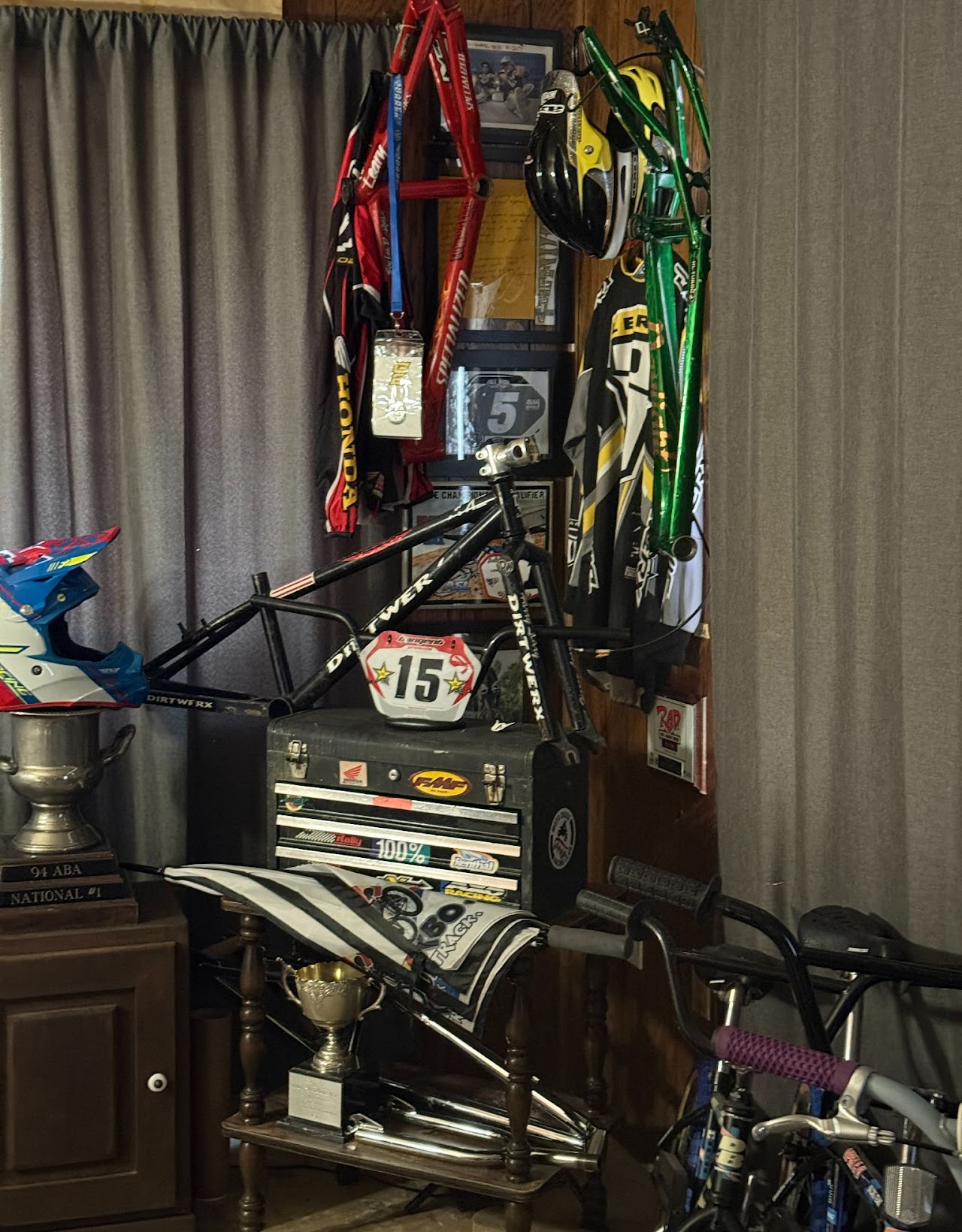
Two source pages become one room. The original LititzBMX.com page boundaries remain preserved in the source trail, but the public exhibit is organized by story rather than upload sequence.
Harry’s Room is a unified digital exhibit preserving 28 unique accession records connected to BMX legend Harry Leary. The room begins with the physical display and then opens into four exhibit zones: a trophy case, a rider’s wardrobe, a workshop bench and a memory wall.
This is not presented as an exhaustive inventory of every Harry Leary object held by Lititz BMX. It is the integrated archival release of the records supplied from the two original collection pages, designed to expand without creating “Page 3,” “Page 4,” or another artificial source-page division.
| Room status | Record |
|---|---|
| Unique accession records | 28 |
| Directly imaged records | 27 |
| Context-only image records | 1 — artifact 26.0076 |
| Source-page duplicate resolved | 26.0048 — one trophy, two source appearances, one integrated record |
| Canonical ID normalization | 26.0067, preserving legacy ID 67 |
Enter the room
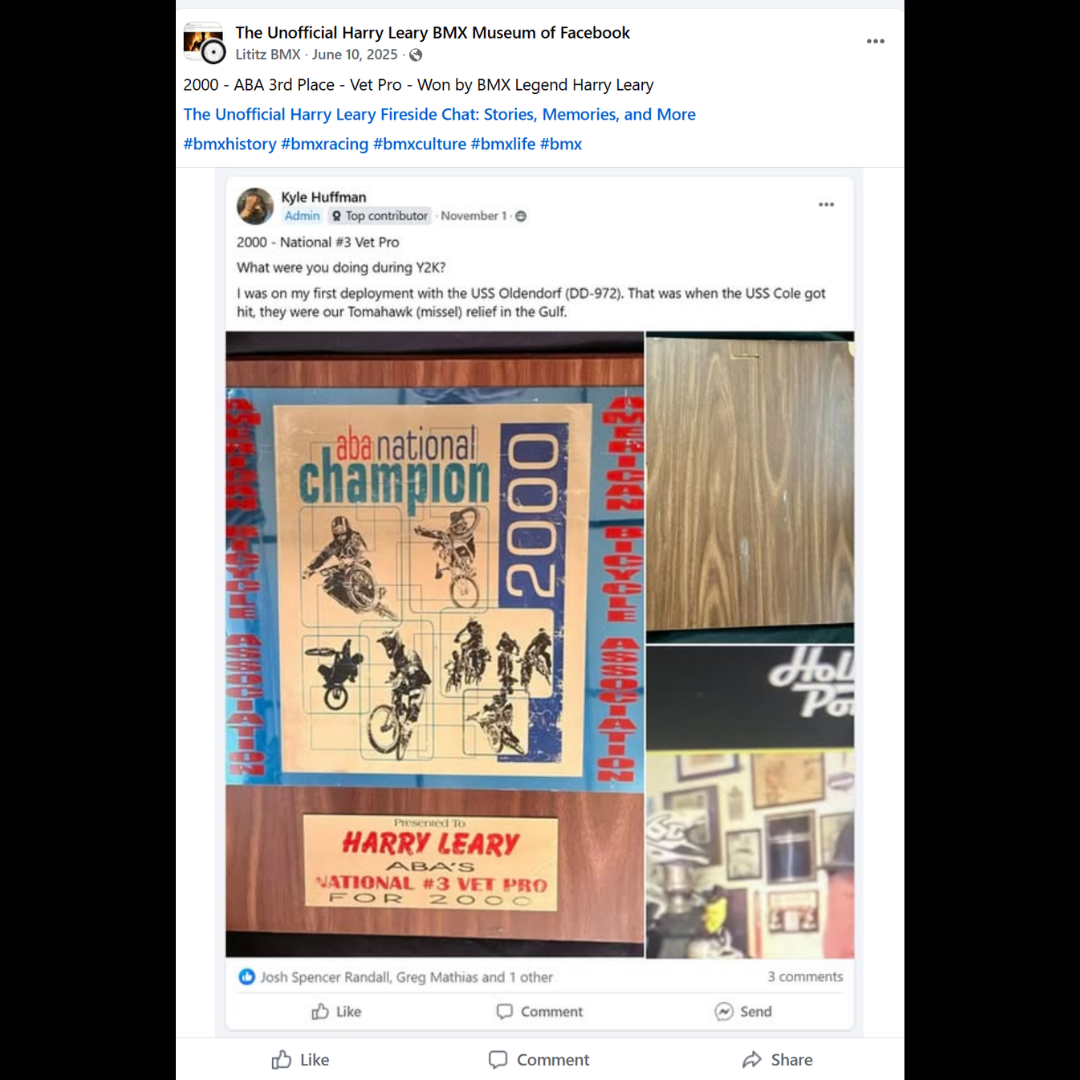
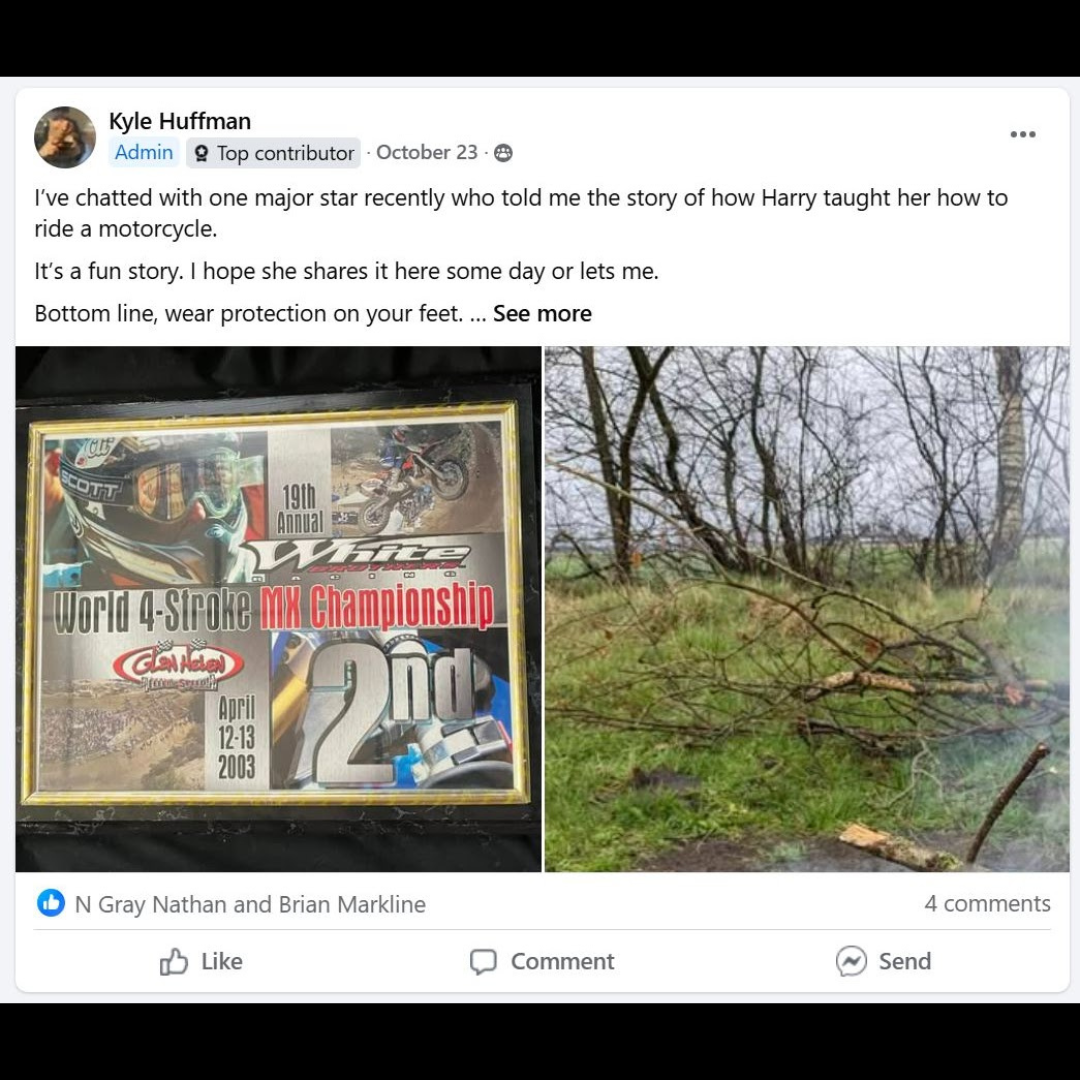
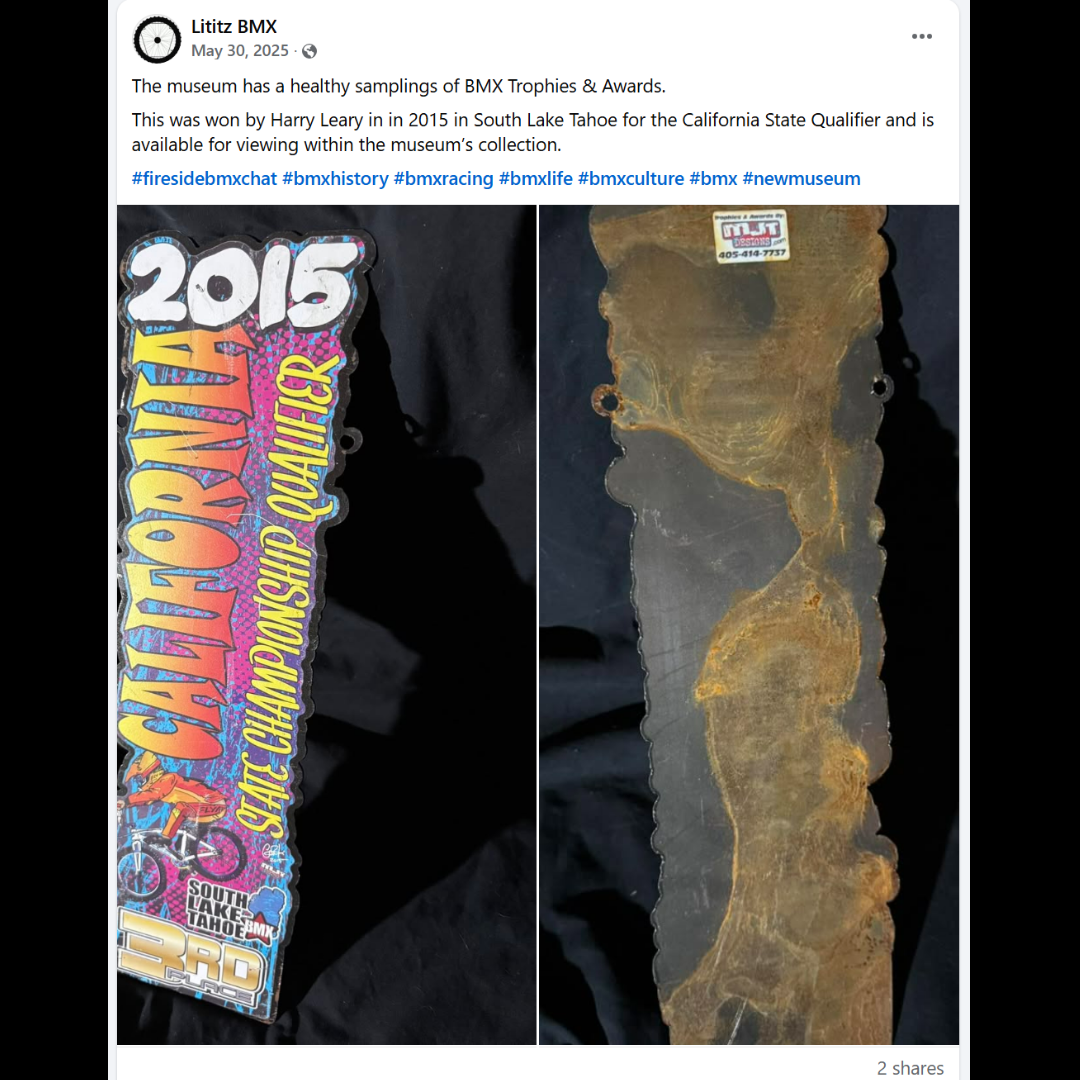
- The Trophy Case — championships, recognition and public service
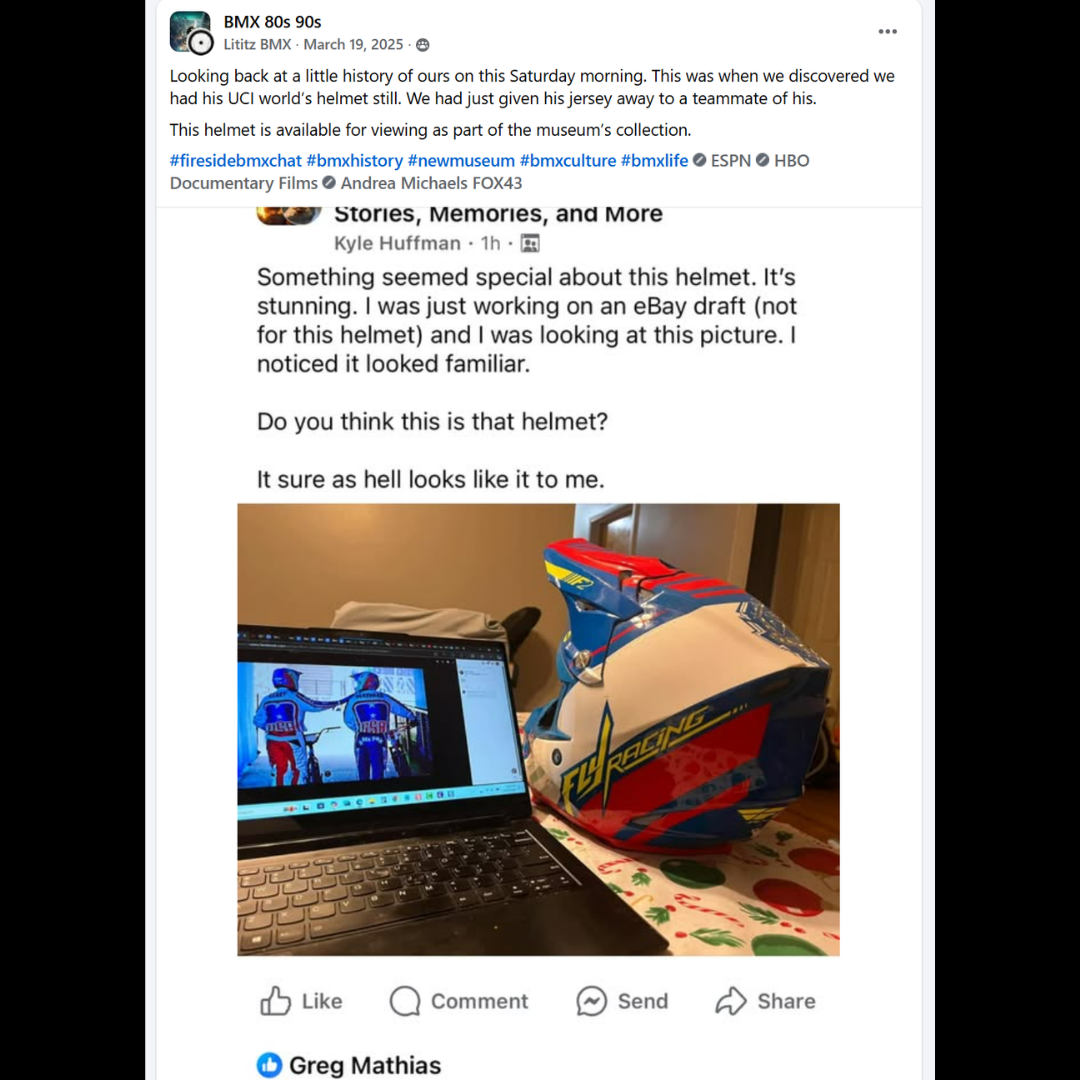
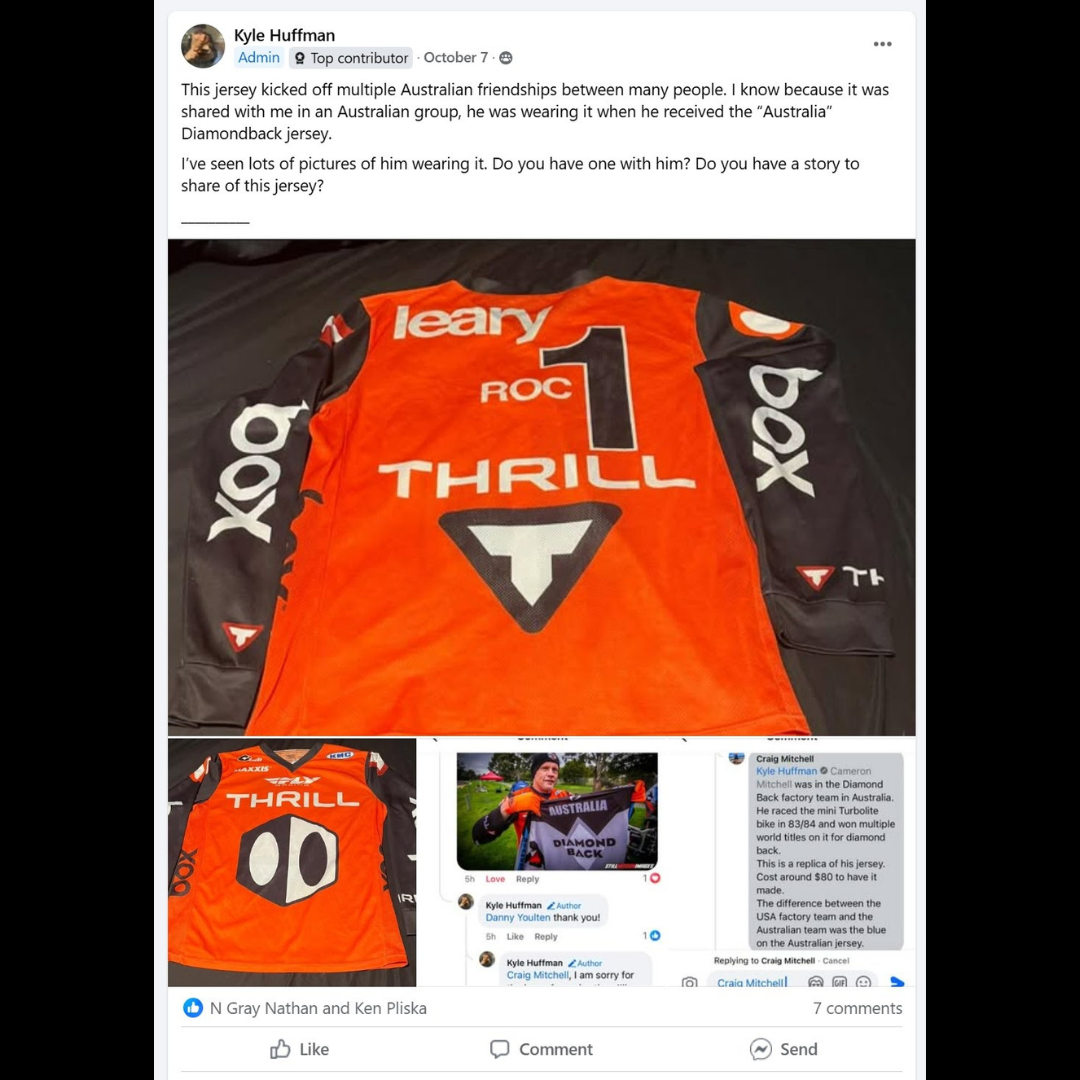
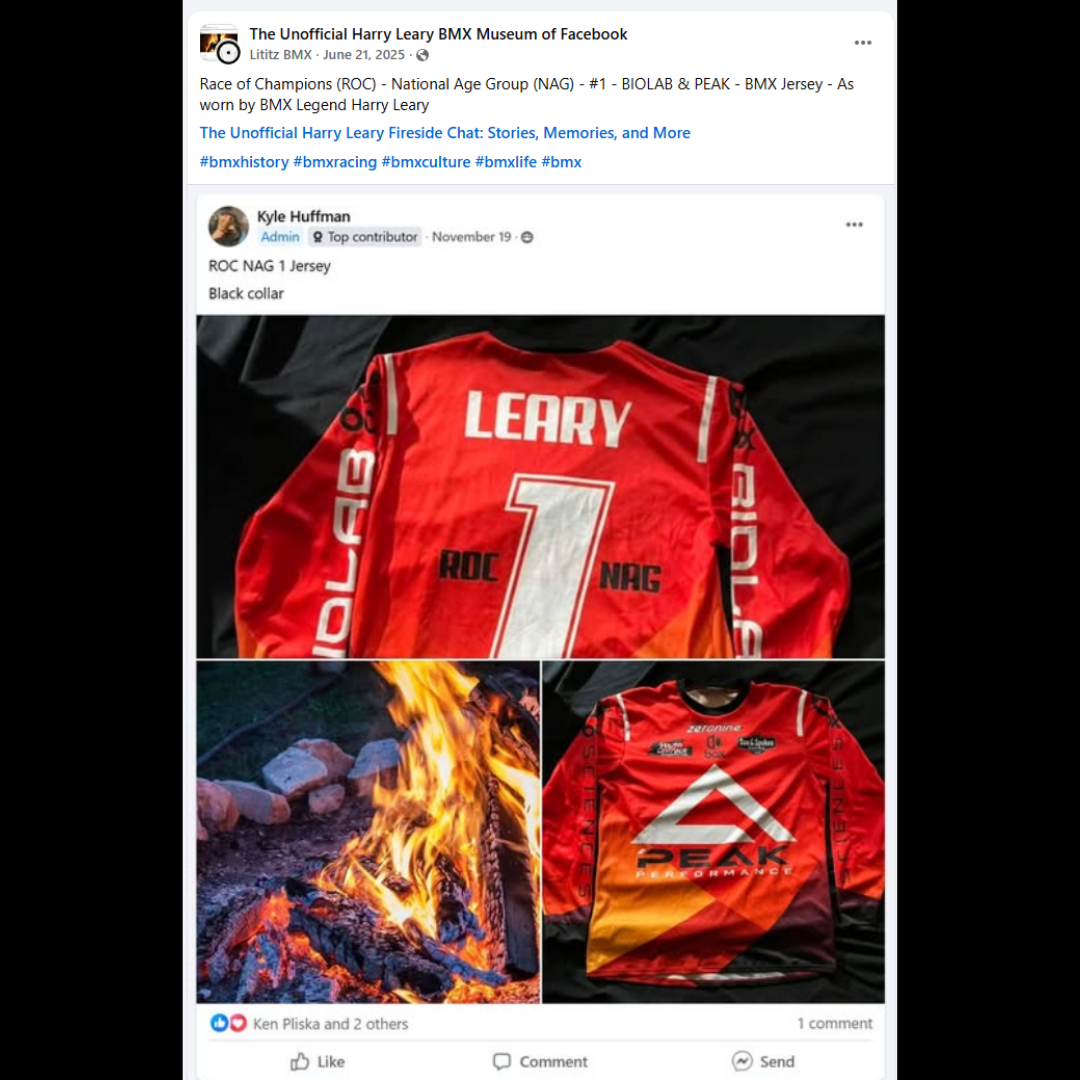
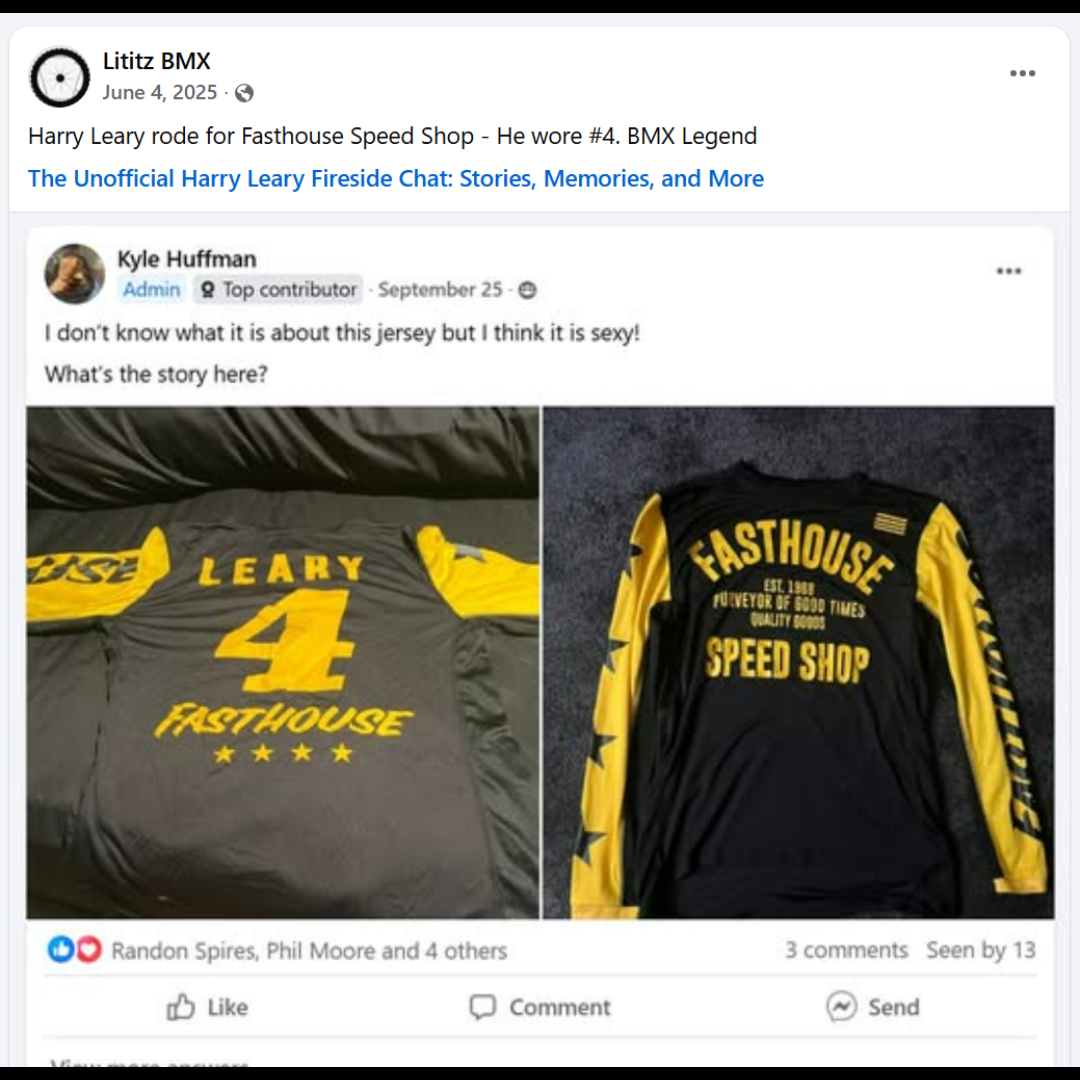
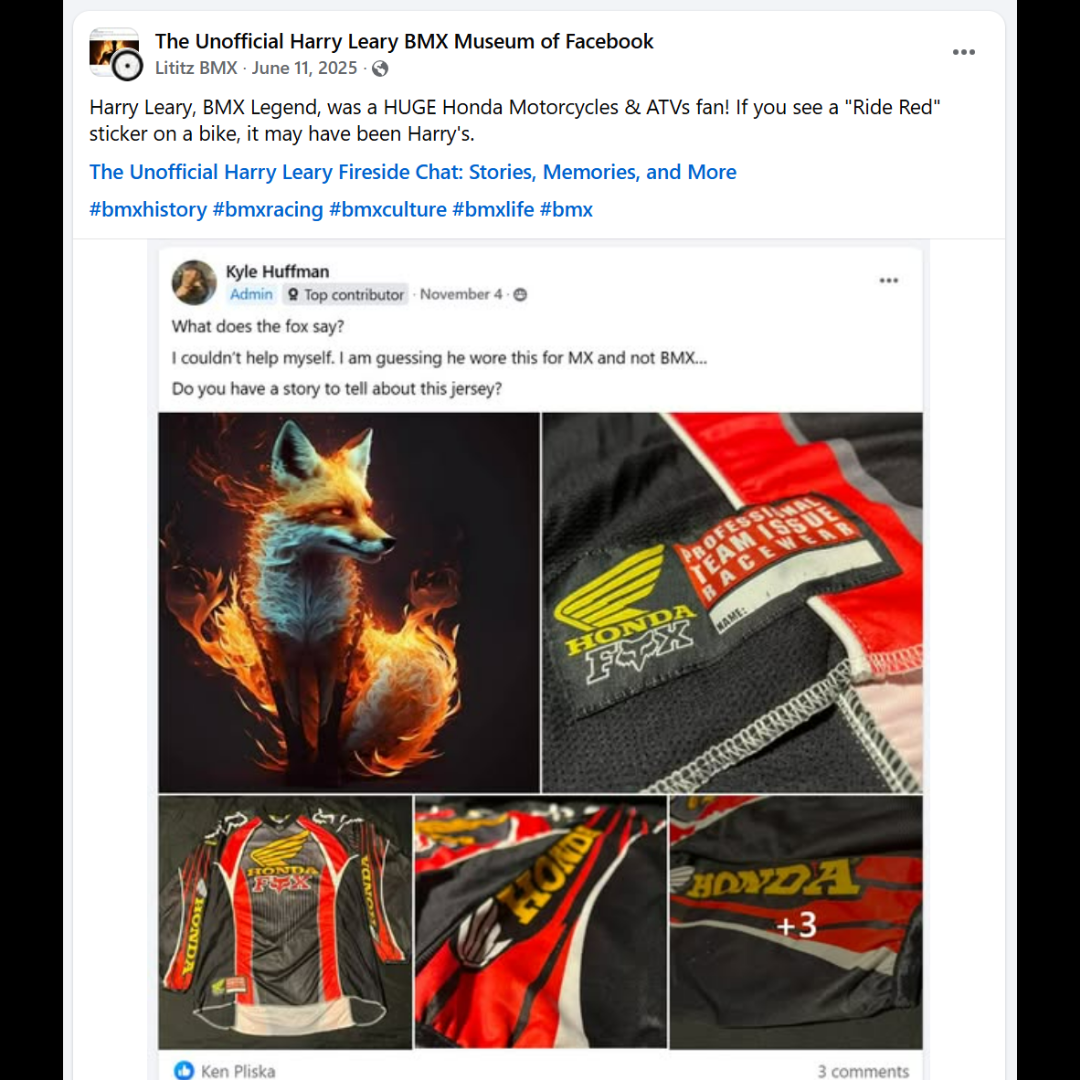
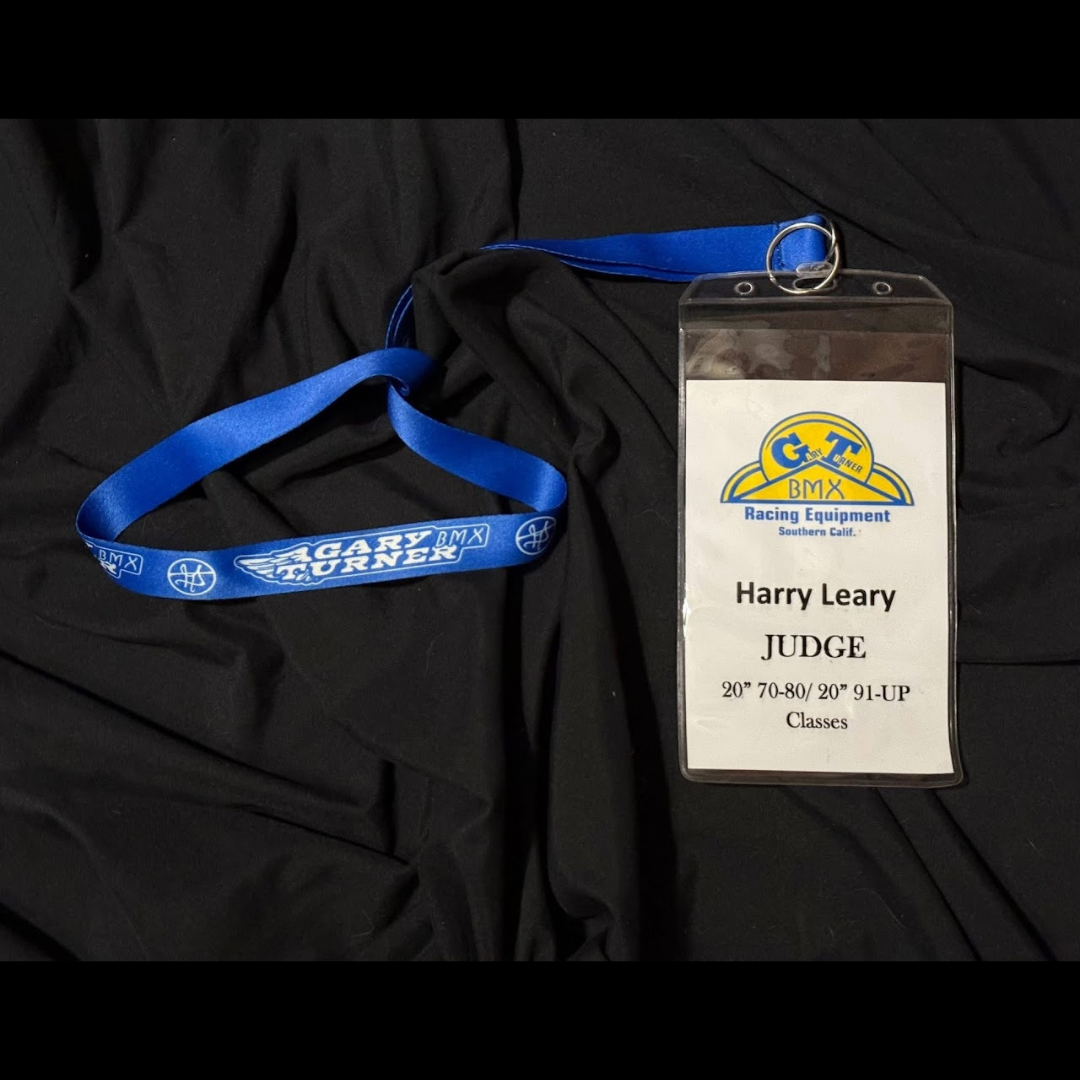
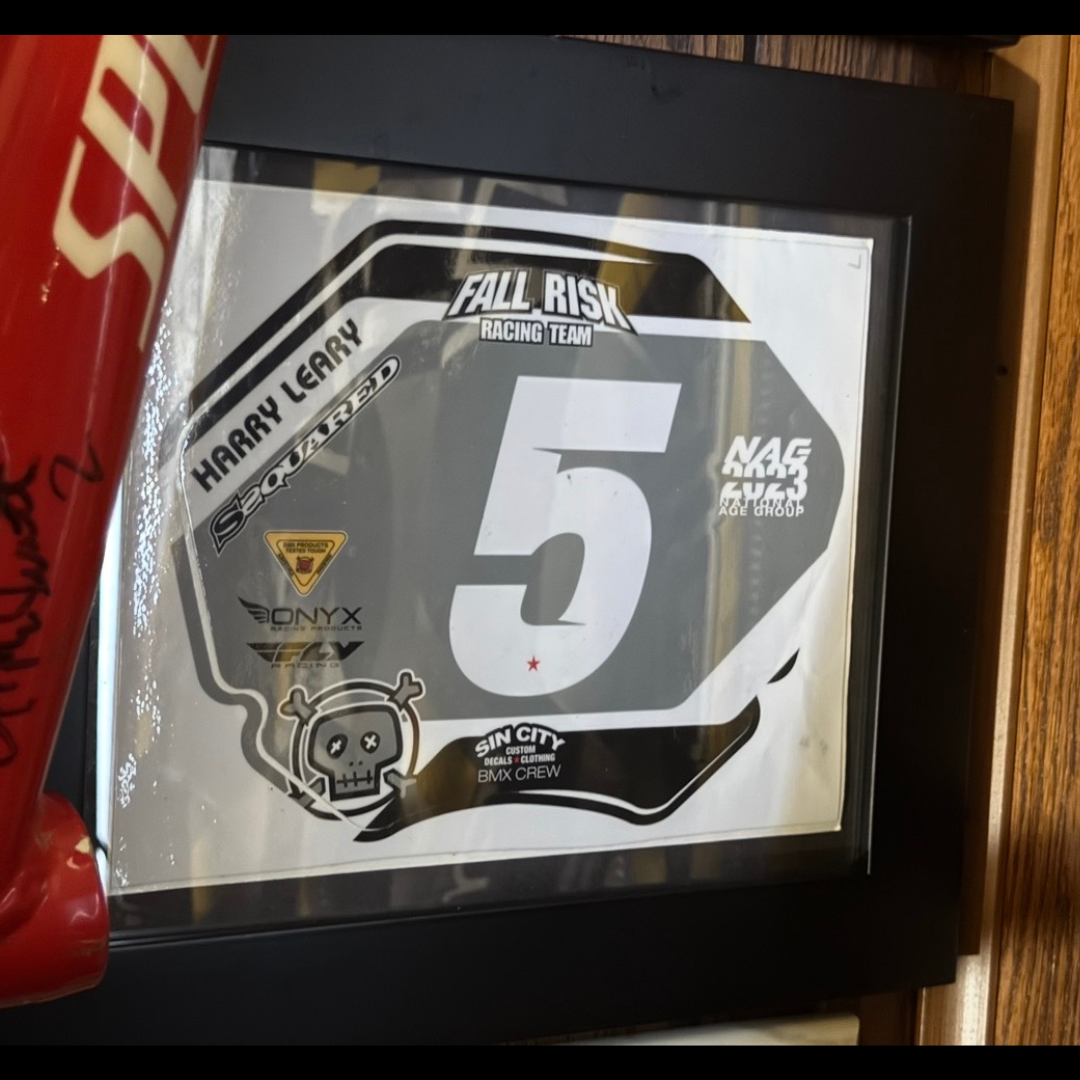
- The Rider’s Wardrobe — jerseys, helmets and race identity
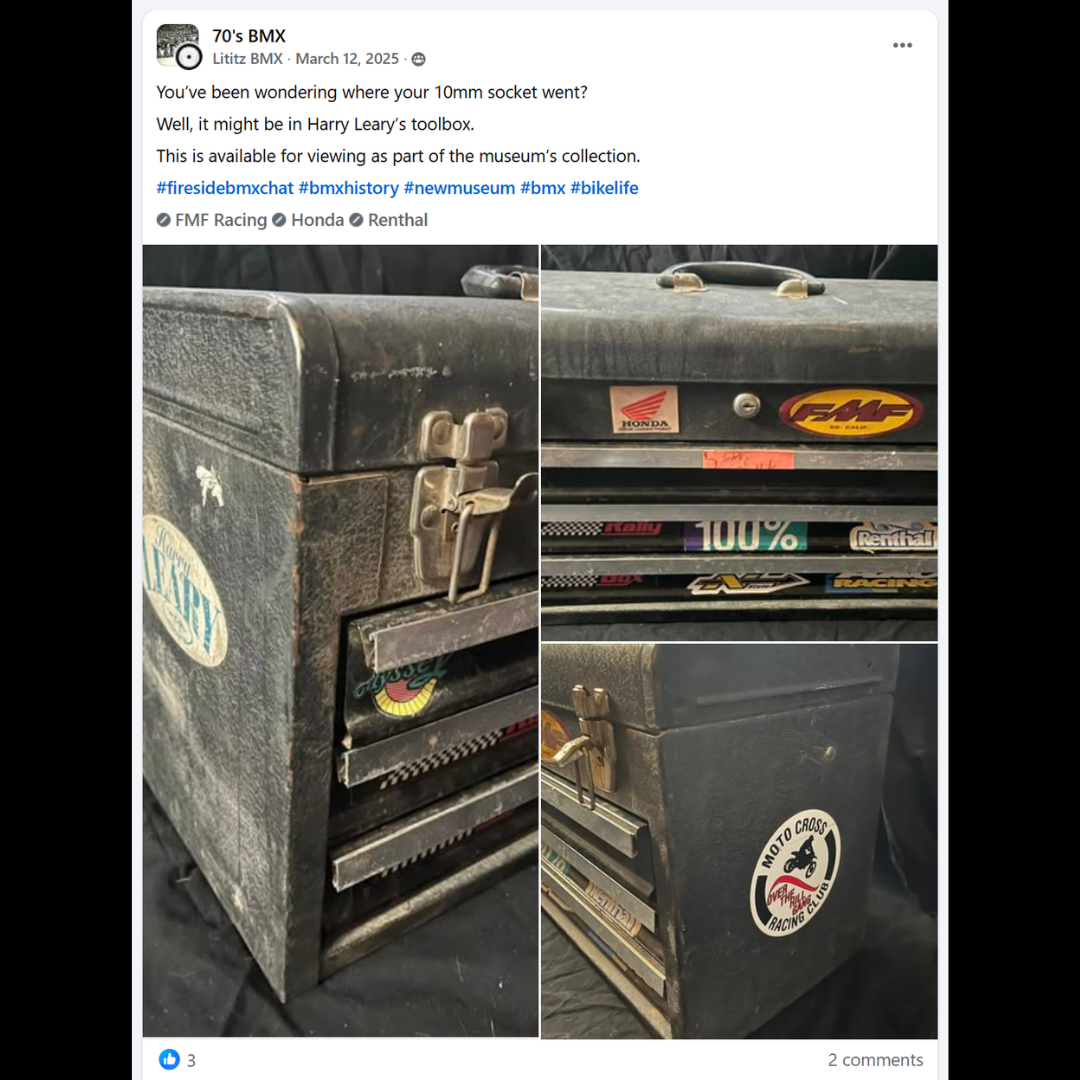
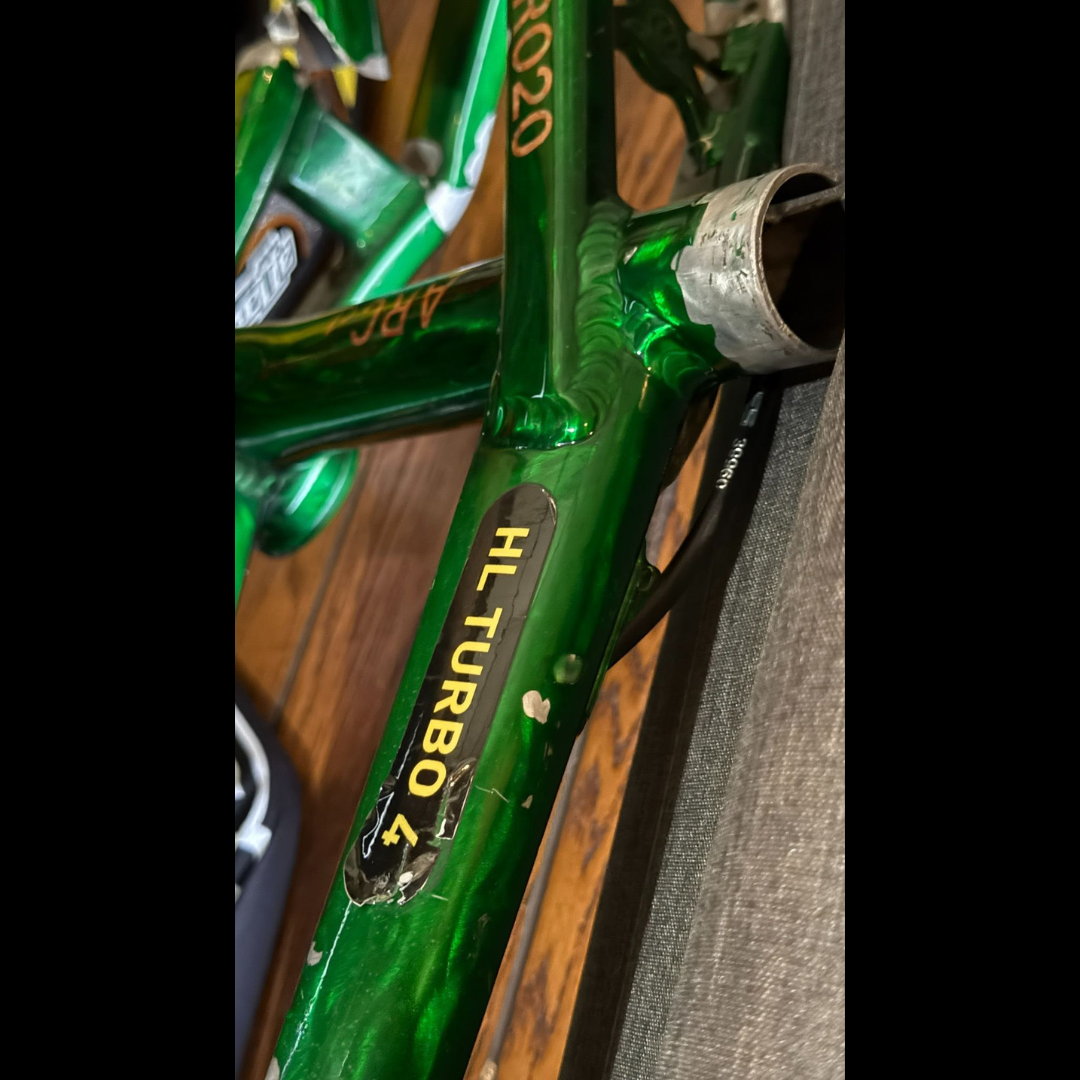
- The Workshop Bench — frames, bars and tools
- The Memory Wall — correspondence, photographs and relationships
The Trophy Case
Championships, recognition and public service
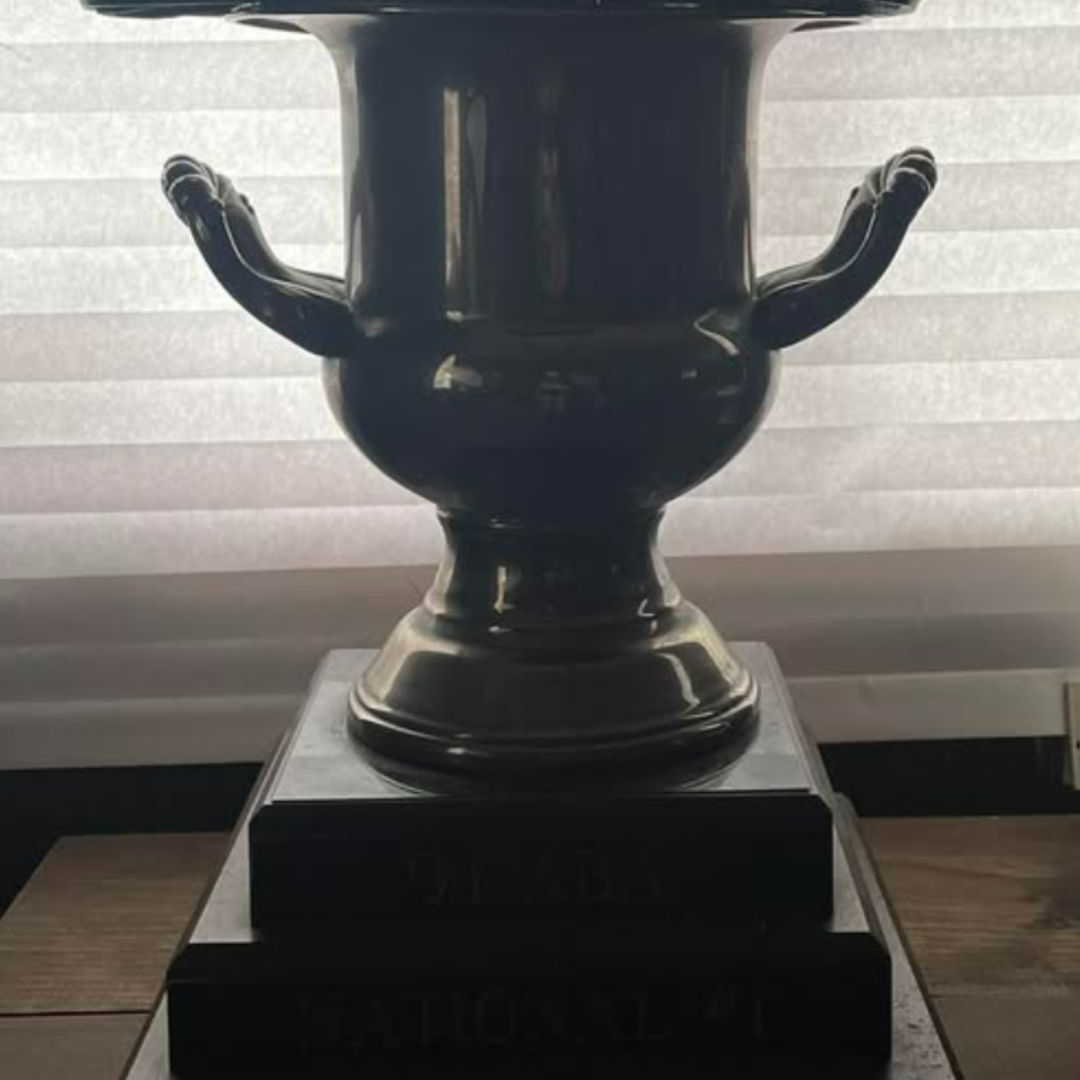
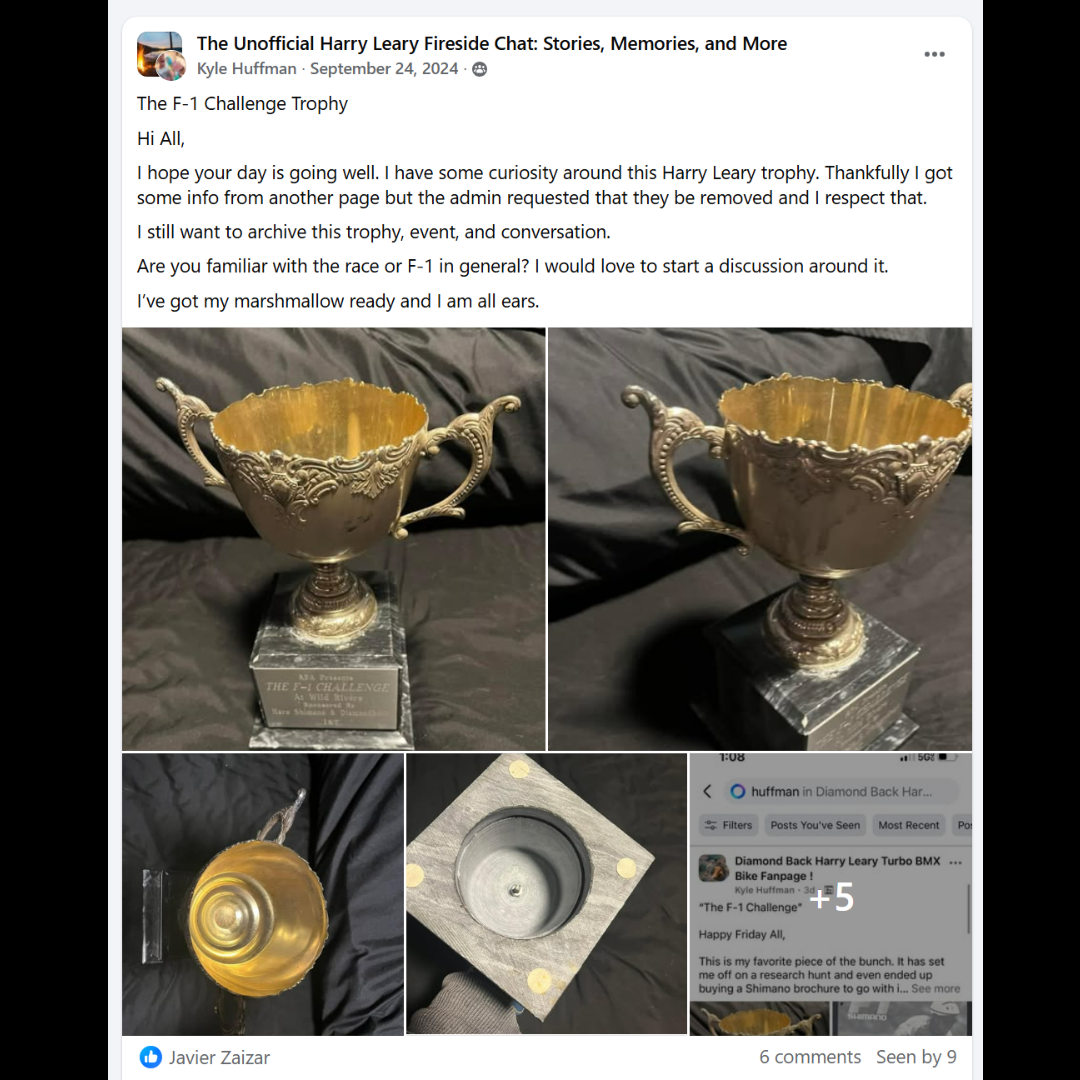
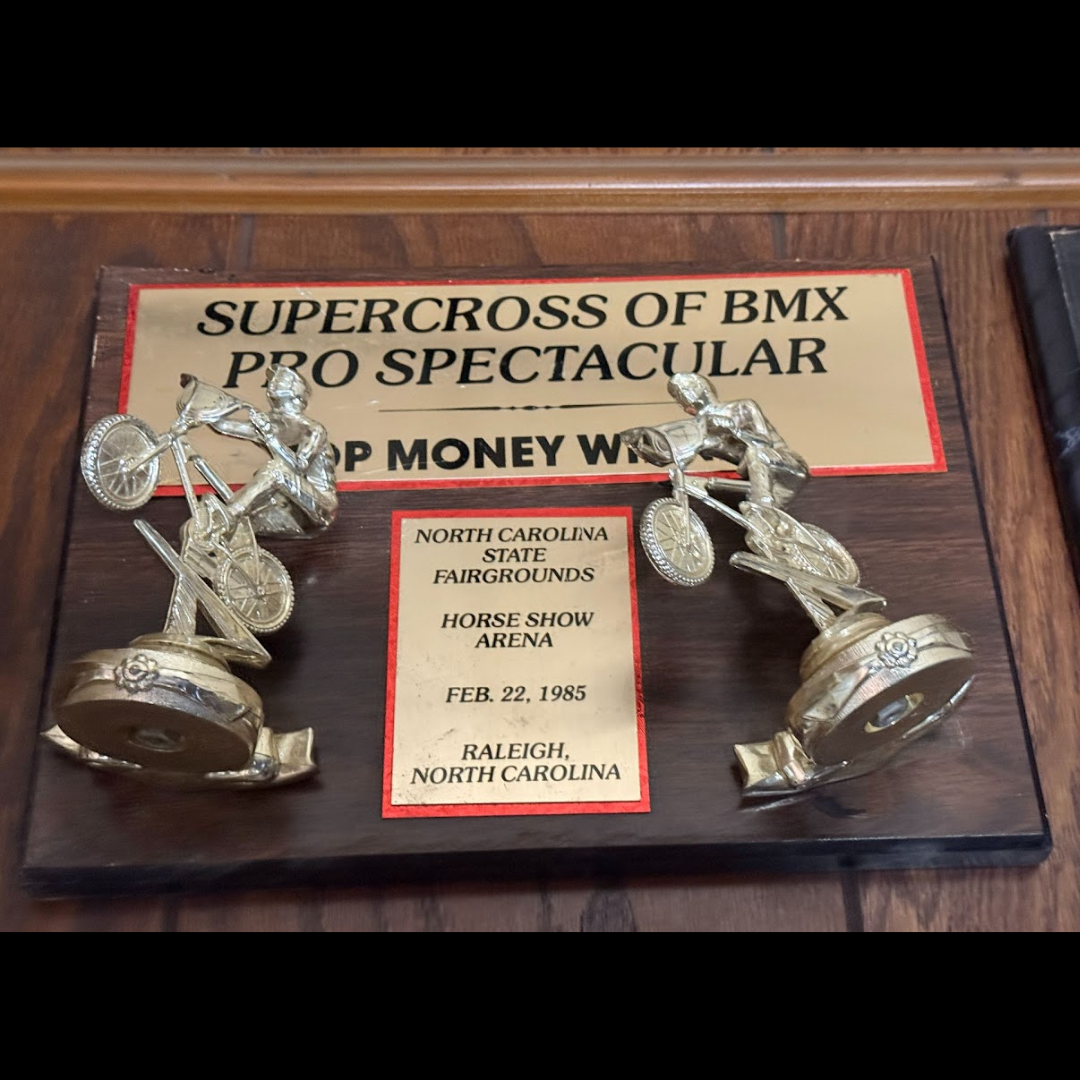
Awards and plaques connect the room to specific seasons, events, titles and moments when BMX reached beyond the track.


The Rider’s Wardrobe
Jerseys, helmets and race identity
Wearable objects preserve team identity, rider numbers, personal habits and the visual language of Harry Leary’s later BMX life.






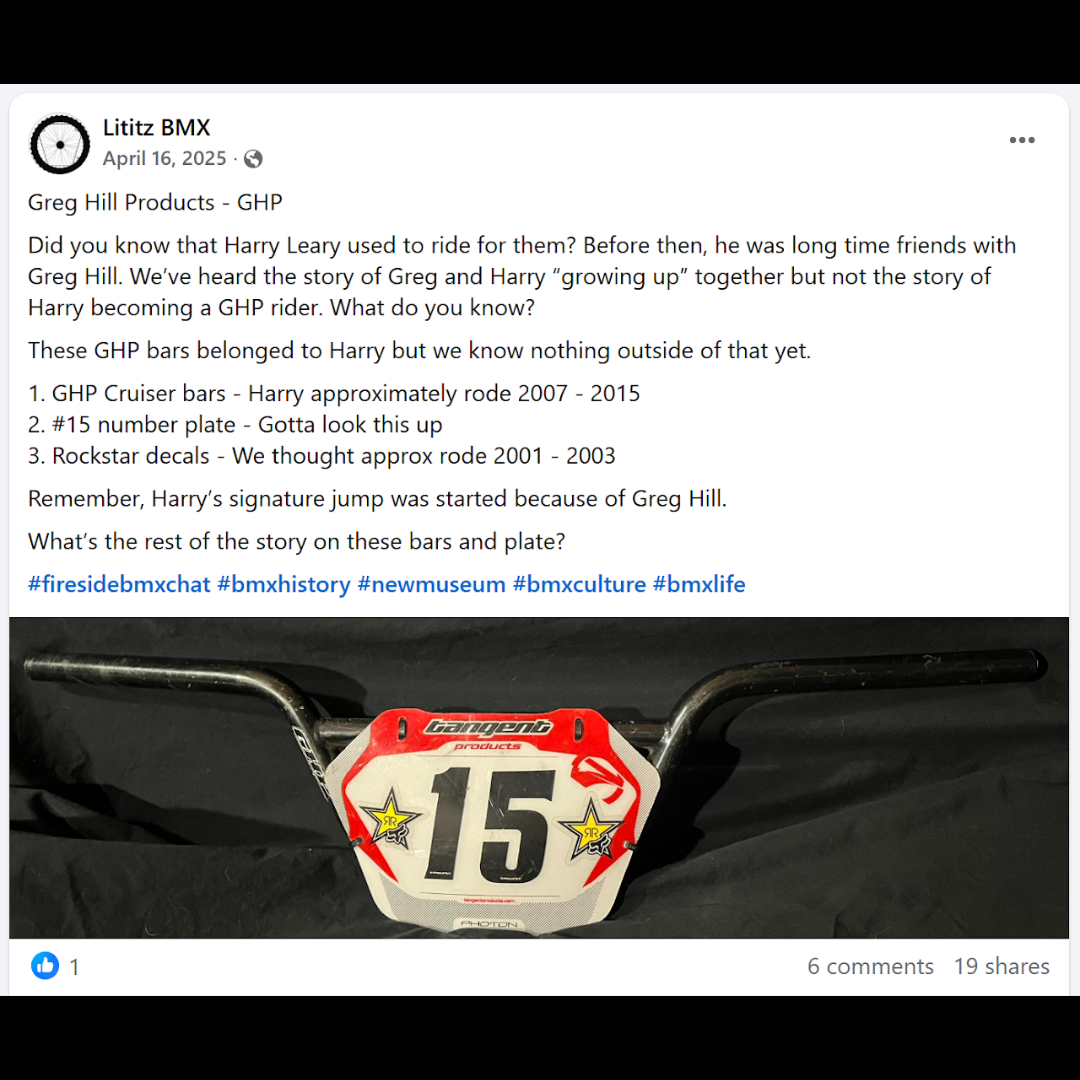
The Workshop Bench
Frames, bars and tools
The workshop objects show history as something built, adjusted, damaged, carried and kept in motion rather than merely displayed.

The Memory Wall
Correspondence, photographs and relationships
Letters, signed photographs and relationship records preserve the human network surrounding the artifacts.
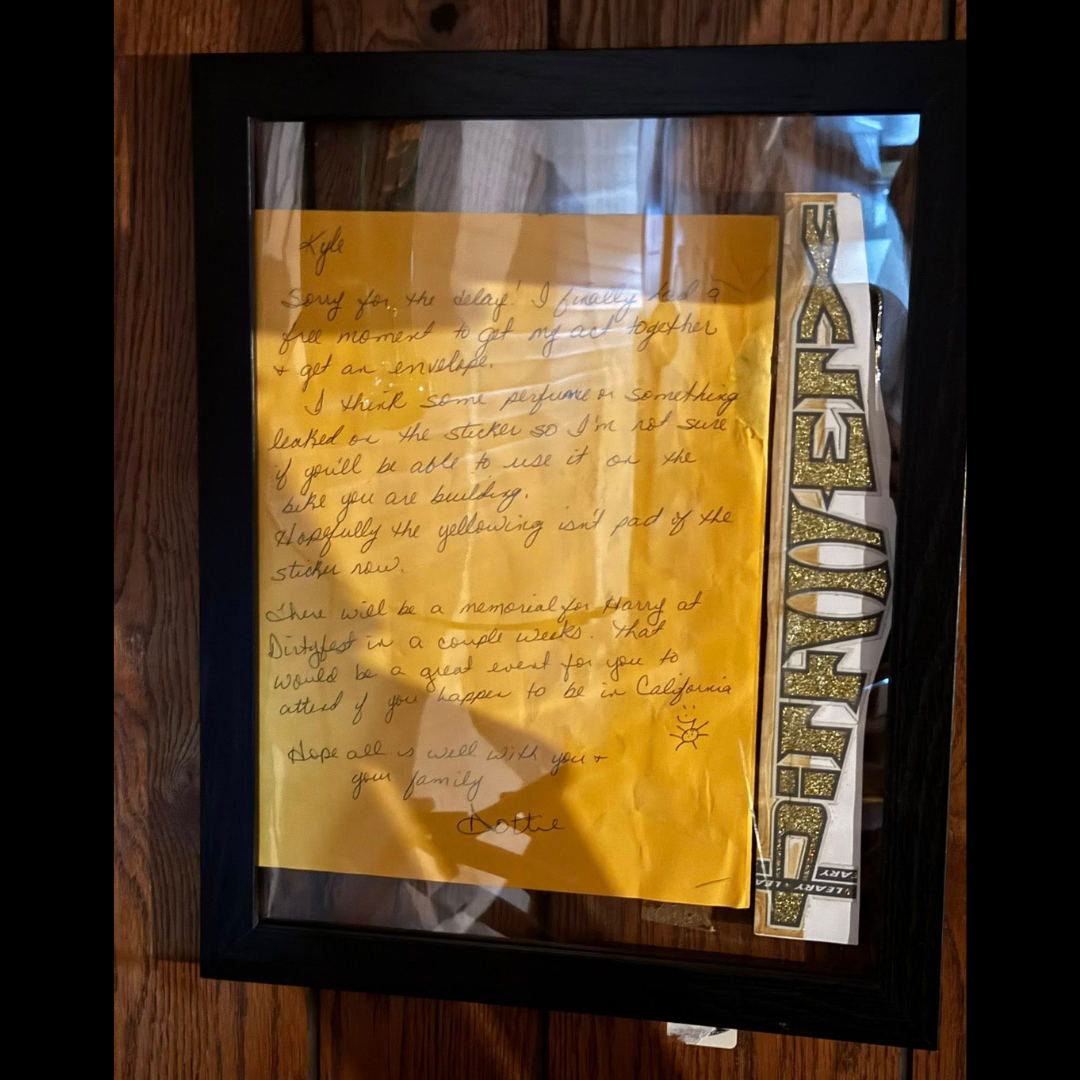 26.0036 — Dottie Ellis-Merki Letter and DIRTWERX Decal | 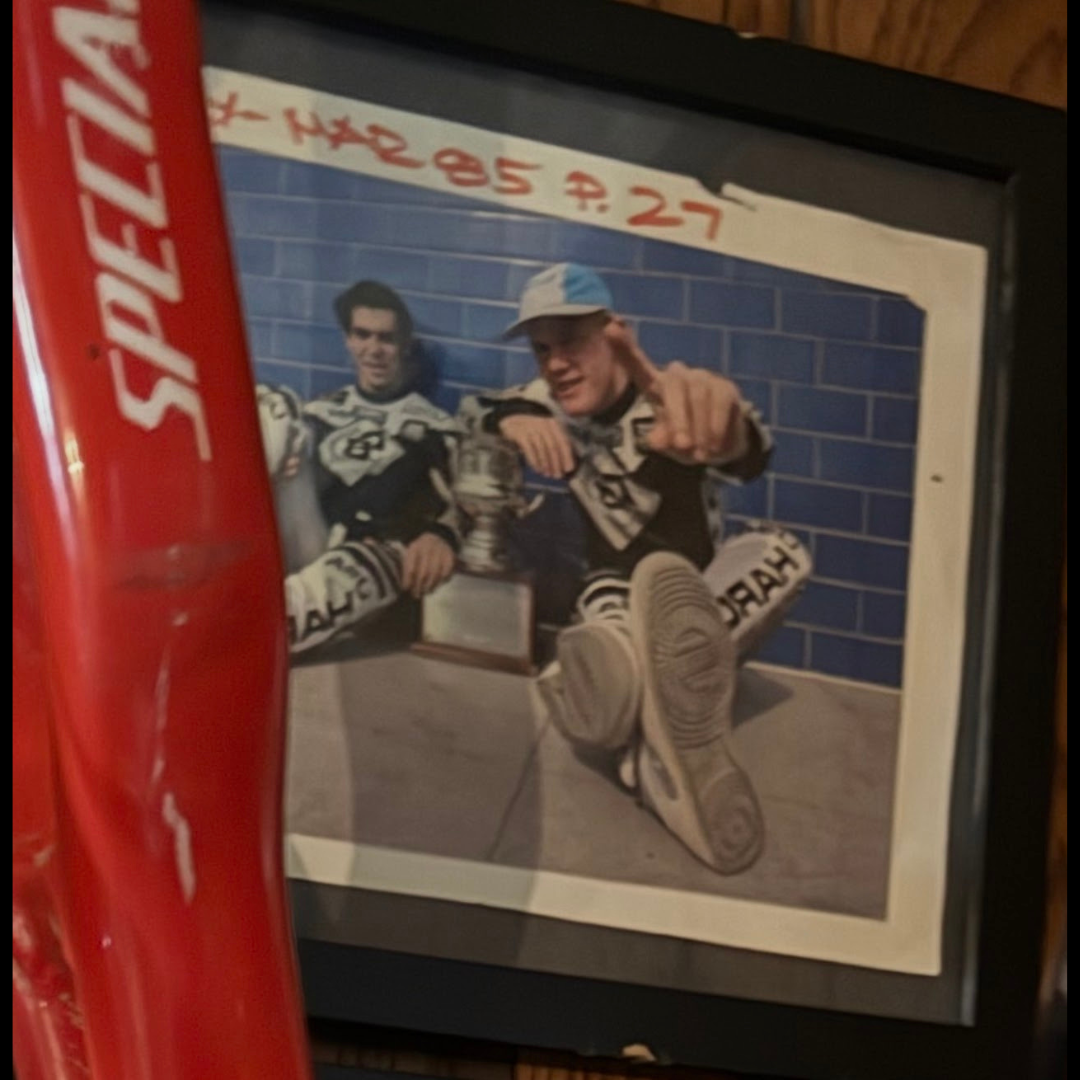 26.0065 — Photograph of Harry Leary and Eddy King at the NORA Cup | 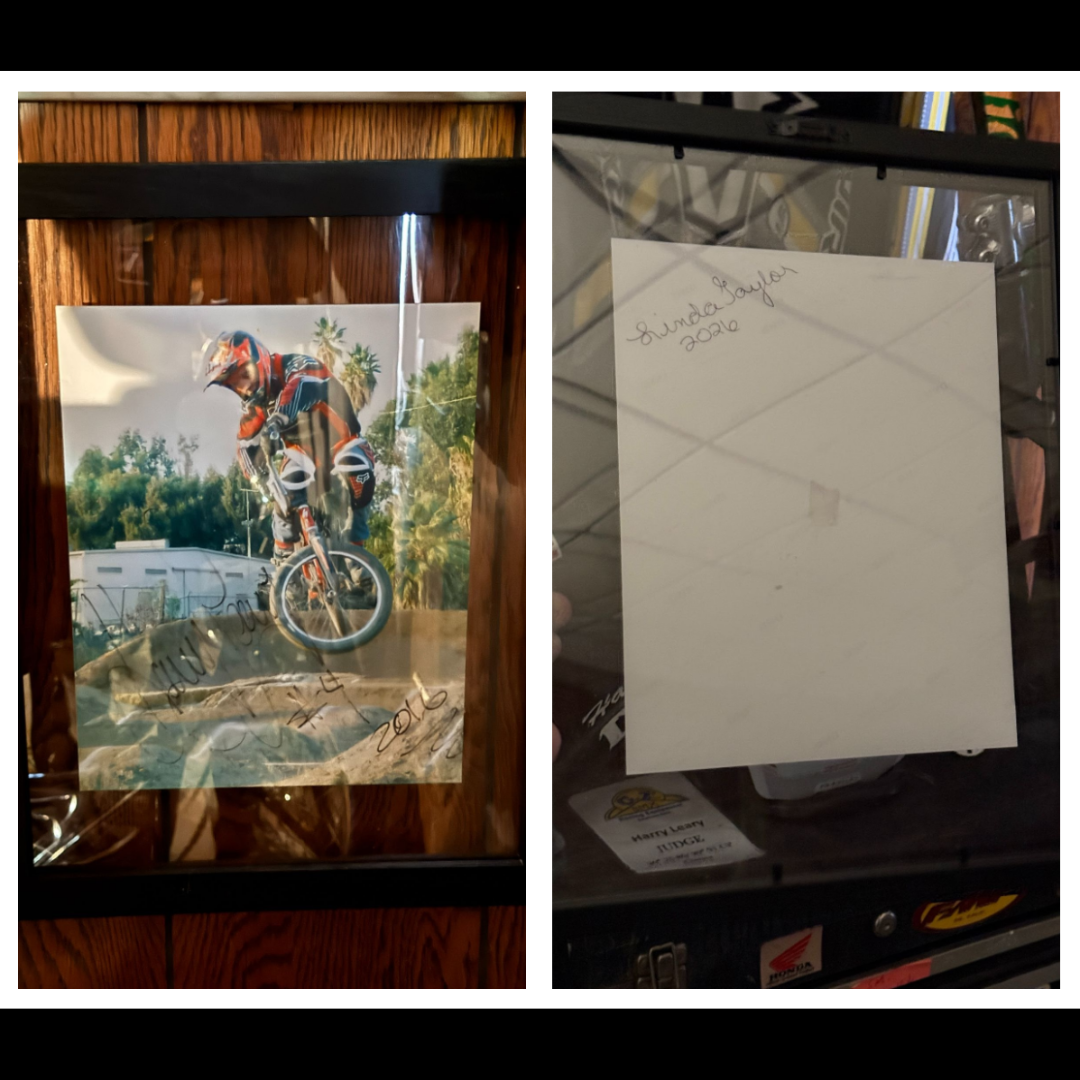 26.0051 — Linda and Harry Leary Signed Copy |
Read the room by story
- Room map and exhibit logic
- Original source-page crosswalk
- People, organizations and brands index
- Provenance and acquisition notes
- Known discrepancies and normalized wording
- Known gaps
- Claim-qualification notes
- DIRTWERX story trail
Machine-readable access
- Complete Harry’s Room register — JSON
- Complete Harry’s Room register — CSV
- Room zones — JSON
- People and organizations index — JSON
- Record metadata schema
- Source inventory
- Image manifest
- SHA-256 fixity
Related archive spaces
- The Digital Jersey Wall
- #OperationDIRTWERX — The Story
- The Lititz BMX Record Collection
- Original LititzBMX.com Harry Leary collection source A
- Original LititzBMX.com Harry Leary collection source B
Curatorial principle
Harry’s Room does not reduce the collection to possession or a list. It preserves the relationship between artifact, rider, event, team, friend, family member and continuing documentary record. The physical room provides the atmosphere; the structured records preserve the evidence; together they hold the essence of the collection even as individual objects continue through time.